chapter two
Materiality assessment

Discover
what matters



Management of material topics
The identified material topics are embedded in our sustainability strategy and governance framework. For each topic, we define policies, actions, targets and responsibilities.
• Environmental topics (e.g. climate mitigation, energy use, circularity, biodiversity) are addressed through our Peak Programme, focusing on reducing carbon emissions, improving resource efficiency and ensuring sustainable sourcing. Progress is monitored using indicators such as carbon footprint and material usage.
• Social topics (e.g. job security, health and safety, training) are managed through our HR policies, focusing on employee wellbeing, safe working conditions and continuous development.
• Governance topics (e.g. corporate culture, supplier management) are addressed through our business conduct and sustainable procurement policies, ensuring ethical behaviour and responsible value chain management.
Responsibilities for managing these topics are assigned to relevant functional leads (e.g. HR, procurement and sustainability), and progress is periodically reviewed by management.
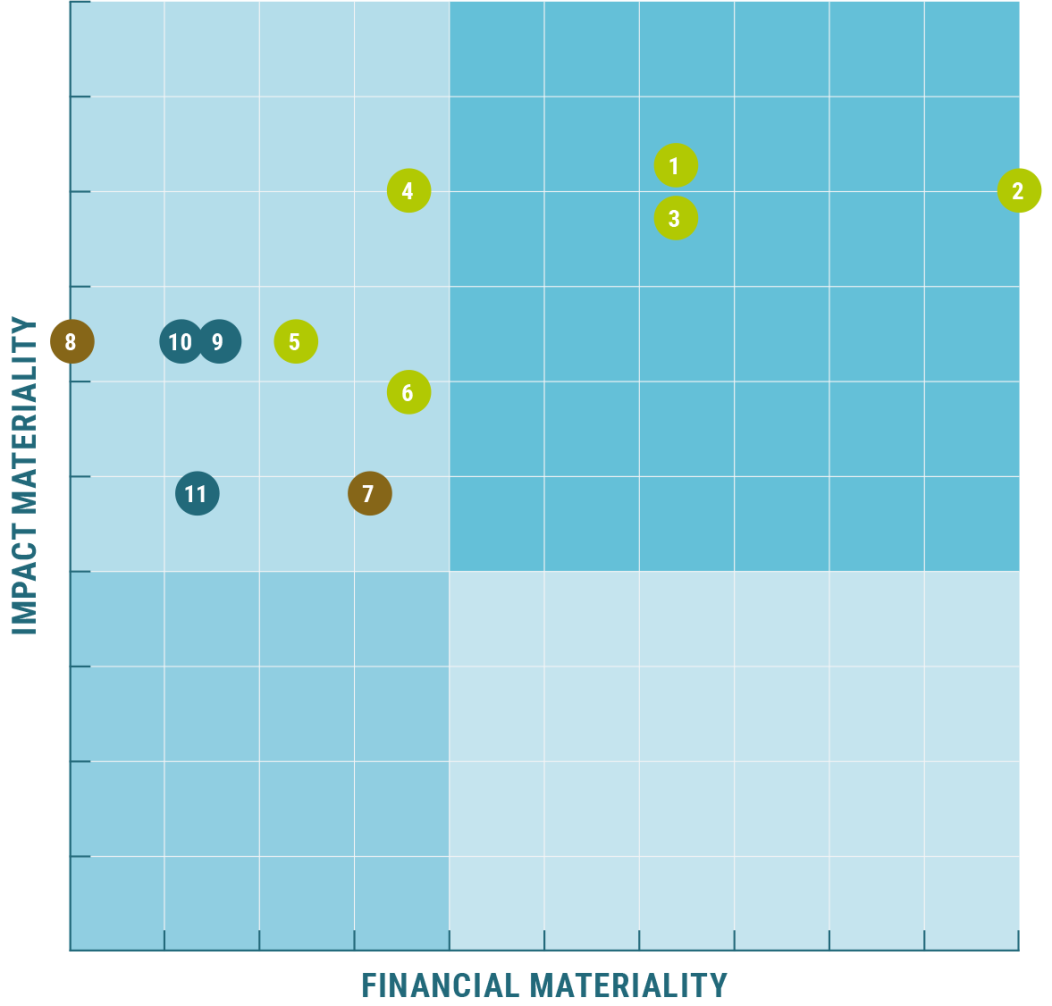
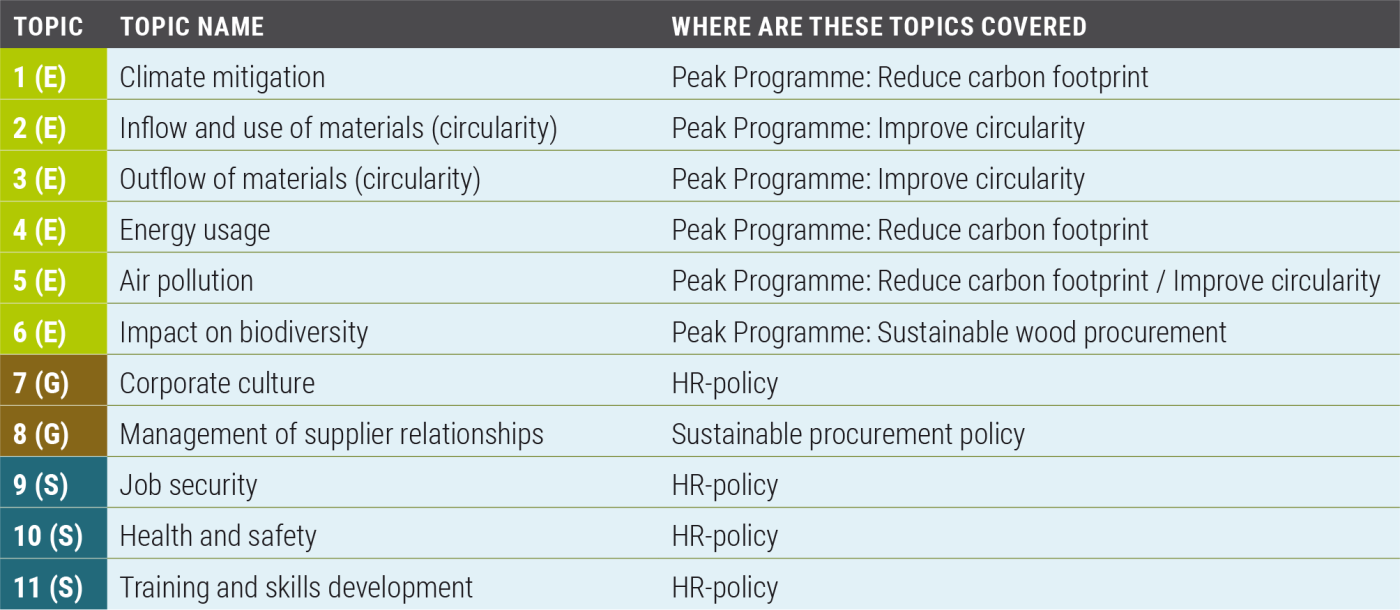
A Double Materiality Assessment (DMA) is essential for identifying key Environmental, Social, and Governance (ESG) topics that impact both our organization and our stakeholders. We conducted an initial assessment in 2022 and updated it in 2024 in alignment with CSRD requirements. Material topics are reviewed annually to ensure continued relevance.
Our materiality analysis considers both impact materiality (inside-out) and financial materiality (outside-in). This ensures that we assess both the impacts of our activities on the environment and society, as well as the risks and opportunities that ESG topics pose to our financial performance. The assessment followed a structured process:
1. Identification of ESG topics based on ESRS categories (environmental, social and governance topics).
2. Stakeholder engagement, including customers, suppliers, employees, NGOs and the Supervisory Board, complemented by desk research and analysis of external sustainability reports.
3. Assessment of impacts, risks and opportunities, where each topic was scored based on severity and likelihood (impact materiality) and financial risk/opportunity (financial materiality).
4. Prioritisation, using a materiality matrix. Topics exceeding defined threshold values were classified as material.
5. Validation, with outcomes reviewed and approved by senior management.
As a result of this process, the following topics have been identified as material. These topics are categorized according to ESRS classifications and mapped internally to relevant policies and programmes.
The key topics outlined form the basis of our sustainability strategy and report. To create additional focus, three United Nations Sustainable Development Goals (12, 13, and 17) are selected and form the ‘Faber Development Goals’. We aim to significantly contribute to these SDGs.
A Double Materiality Assessment (DMA) is essential for identifying key Environmental, Social, and Governance (ESG) topics that impact both our organization and our stakeholders. We conducted an initial assessment in 2022 and updated it in 2024 in alignment with CSRD requirements. Material topics are reviewed annually to ensure continued relevance.
Sustainability Progress Report | 2025
chapter two
Materiality assessment
Discover
what matters


The identified material topics are embedded in our sustainability strategy and governance framework. For each topic, we define policies, actions, targets and responsibilities.
• Environmental topics (e.g. climate mitigation, energy use, circularity, biodiversity) are addressed through our Peak Programme, focusing on reducing carbon emissions, improving resource efficiency and ensuring sustainable sourcing. Progress is monitored using indicators such as carbon footprint and material usage.
• Social topics (e.g. job security, health and safety, training) are managed through our HR policies, focusing on employee wellbeing, safe working conditions and continuous development.
• Governance topics (e.g. corporate culture, supplier management) are addressed through our business conduct and sustainable procurement policies, ensuring ethical behaviour and responsible value chain management.
Responsibilities for managing these topics are assigned to relevant functional leads (e.g. HR, procurement and sustainability), and progress is periodically reviewed by management.
Management of material topics
A Double Materiality Assessment (DMA) is essential for identifying key Environmental, Social, and Governance (ESG) topics that impact both our organization and our stakeholders. We conducted an initial assessment in 2022 and updated it in 2024 in alignment with CSRD requirements. Material topics are reviewed annually to ensure continued relevance.
Our materiality analysis considers both impact materiality (inside-out) and financial materiality (outside-in). This ensures that we assess both the impacts of our activities on the environment and society, as well as the risks and opportunities that ESG topics pose to our financial performance. The assessment followed a structured process:
1. Identification of ESG topics based on ESRS categories (environmental, social and governance topics).
2. Stakeholder engagement, including customers, suppliers, employees, NGOs and the Supervisory Board, complemented by desk research and analysis of external sustainability reports.
3. Assessment of impacts, risks and opportunities, where each topic was scored based on severity and likelihood (impact materiality) and financial risk/opportunity (financial materiality).
4. Prioritisation, using a materiality matrix. Topics exceeding defined threshold values were classified as material.
5. Validation, with outcomes reviewed and approved by senior management.
As a result of this process, the following topics have been identified as material. These topics are categorized according to ESRS classifications and mapped internally to relevant policies and programmes.
The key topics outlined form the basis of our sustainability strategy and report. To create additional focus, three United Nations Sustainable Development Goals (12, 13, and 17) are selected and form the ‘Faber Development Goals’. We aim to significantly contribute to these SDGs.
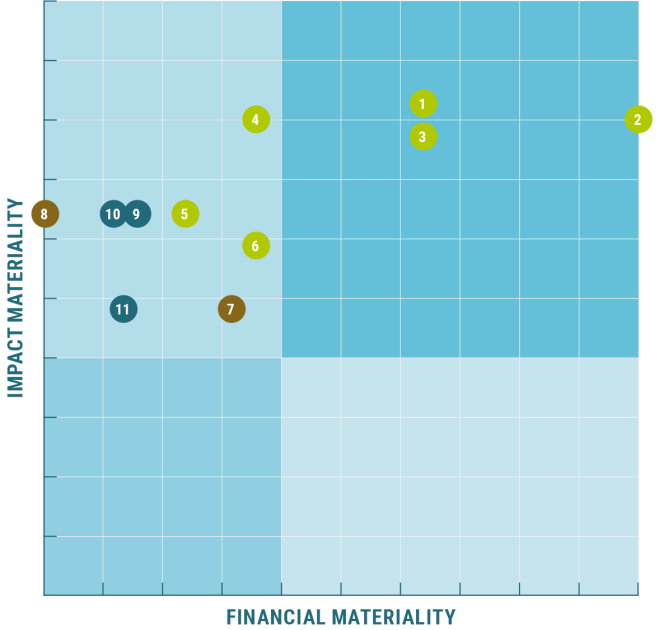
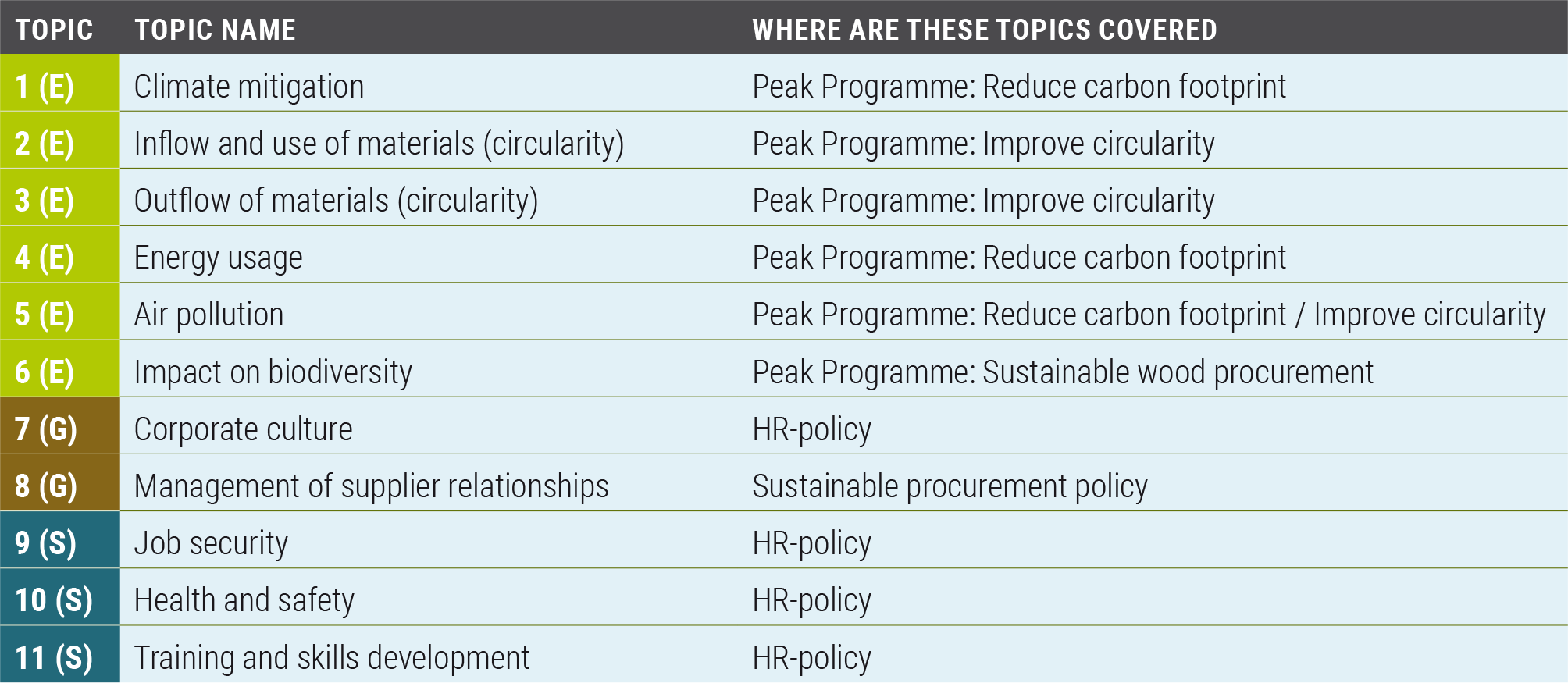
A Double Materiality Assessment (DMA) is essential for identifying key Environmental, Social, and Governance (ESG) topics that impact both our organization and our stakeholders. We conducted an initial assessment in 2022 and updated it in 2024 in alignment with CSRD requirements. Material topics are reviewed annually to ensure continued relevance.
Sustainability Progress Report | 2025