The Role of Transport in
Sustainable Logistics

Moving smarter,
every mile
Collaboration across the supply chain can unlock powerful efficiency gains. A partnership with Salisbury Poultry in the UK&I region demonstrates how simple changes can deliver substantial results.
The challenge: Reduce empty return journeys while maintaining cost efficiency.
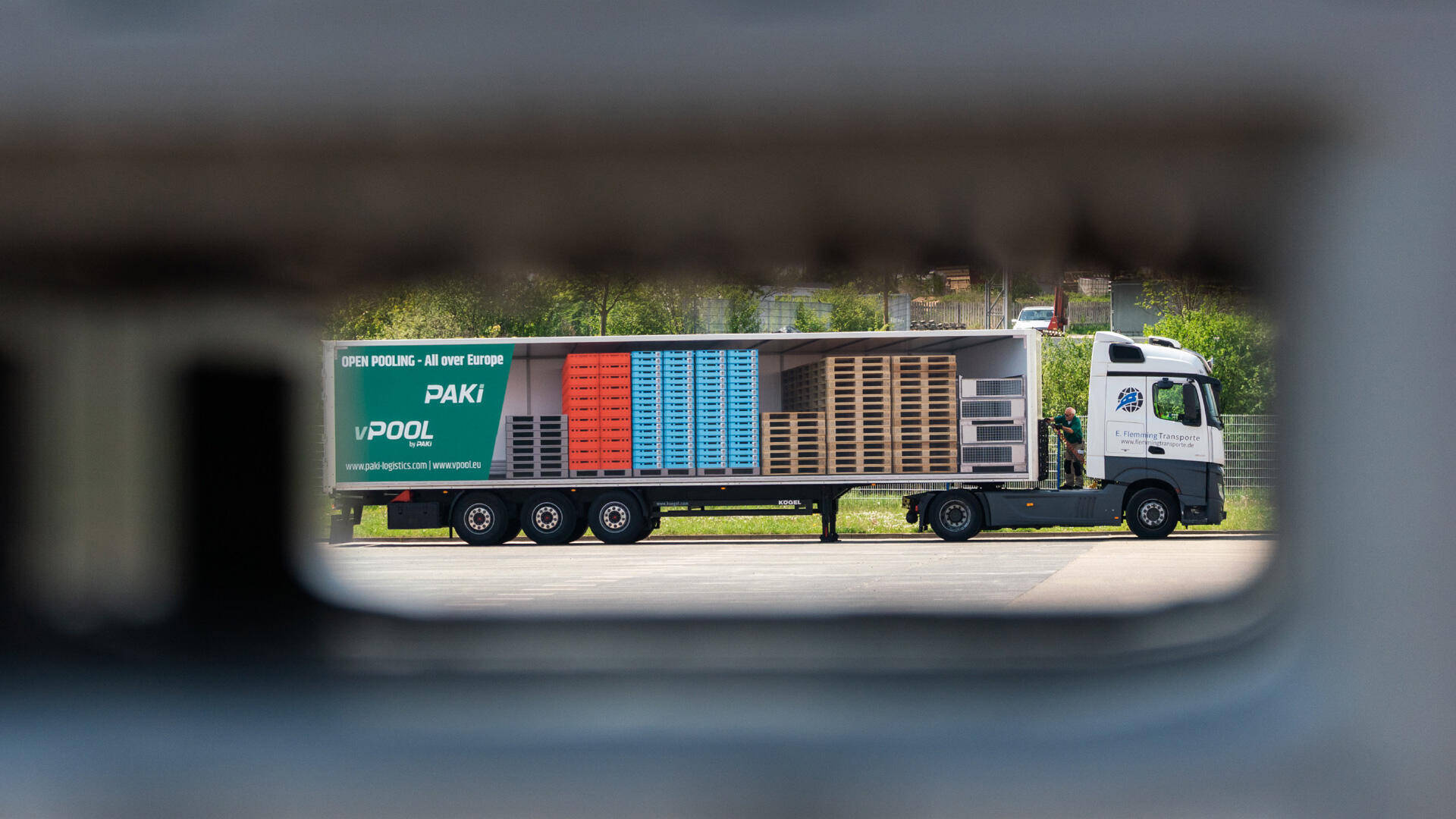
The solution: Trucks delivering poultry to retailers collect empty pallets on return legs. Pallets are returned to the customer for reuse in future deliveries. A closed-loop system ensures continuous utilisation of transport capacity.
Results: More than 40,000 miles eliminated and 70 tonnes of CO₂ emissions avoided.
A simple operational adjustment created a smarter logistics loop, reducing emissions, eliminating waste, and improving efficiency without increasing costs.
IPP UKI & Salisbury Poultry
Spotlight 4: Collaborative Efficiency
Innovation is essential to future-proof logistics and accelerate the transition to low-emission transport. In France, a pilot project with XPO tested the use of electric trucks for short-distance transport within the PAKi network.
The pilot delivered early, tangible results:
4.1-tonnes CO₂ emissions saved within the first four months compared to the diesel alternative
Demonstrated the operational feasibility of EV trucks on short-haul routes
These environmental gains were further enhanced through operational innovation. By ensuring the first truck is loaded overnight, the operation eliminates early-morning waiting times, improving vehicle utilisation and overall efficiency.
XPO, the transport partner for this pilot, brings strong sustainability credentials, including:
Ecovadis Gold Medal (2024)
Ranking in the top 1% of road freight providers globally
This pilot shows how combining new technology with smarter operations can unlock greater benefits than either approach alone. It confirms that electric transport is a viable solution for the network, while highlighting clear opportunities to scale low-emission logistics across the network.
Electric Truck Pilot with XPO (PAKi, FR)
Spotlight 3: Innovation
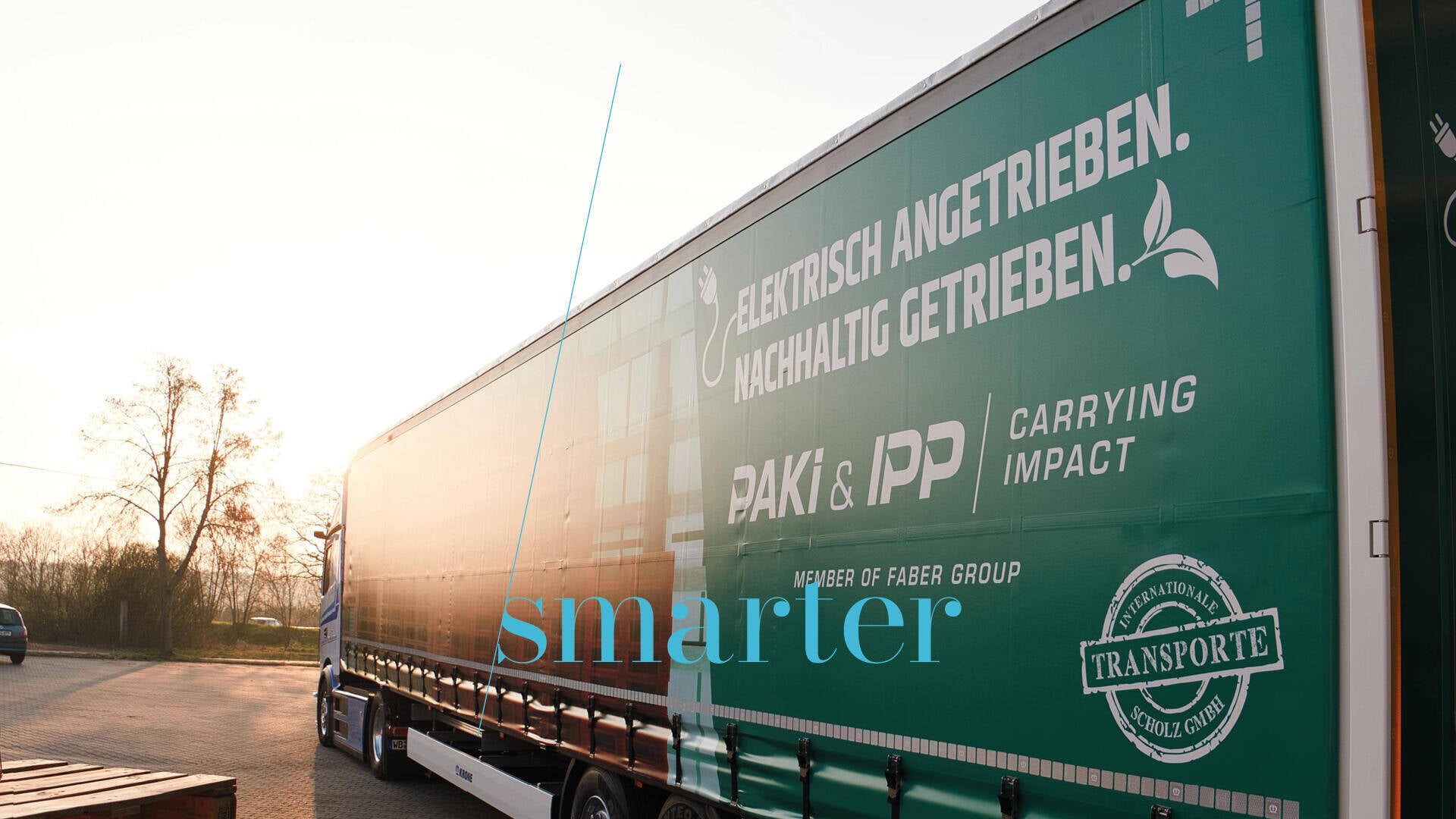
To accelerate decarbonization, we’ve started working with haulers using HVO (Hydrotreated Vegetable Oil) as a lower-carbon alternative to diesel. PAKi Logistics & IPP in Germany are partnering with Scholz Transporte using HVO as alternative fuel and in 2025 HVO has been introduced at our PRS operations. This transition has been enabled through a coordinated, market-driven approach:
Conducting market analysis to identify viable HVO supply opportunities, embedding HVO requirements into transport tenders, collaborating with carriers to increase HVO adoption across the network and establishing a structured roadmap to scale usage over time.
The increased share of HVO fuel has reduced lifecycle emissions from transport while maintaining operational reliability, demonstrating the importance of supply chain collaboration in fuel transition.
HVO Integration in PRS
Spotlight 2: Alternative Fuels
The IPP Iberia team achieved the Lean & Green 4-star certification, recognising significant progress in reducing transport emissions and improving logistics efficiency. To reach this milestone, the team implemented a series of targeted initiatives:
• Reducing transport kilometres through optimised routing and planning
• Pool management optimisation, improving asset utilisation across the network
• Stronger collaboration with hauliers, increasing the efficiency and utilisation of available fleets
These combined initiatives have delivered measurable emissions reductions while strengthening regional supply chain performance.
Beyond the operational gains, achieving Lean & Green certification demonstrates how structured logistics programmes can directly link sustainability targets with performance improvements. By setting clear benchmarks, tracking progress, and encouraging continuous optimisation, such certifications act as both a framework for accountability and a driver of efficiency, ensuring that environmental improvements go hand in hand with better service levels and cost performance.
IPP Iberia Lean & Green 4-Star
Spotlight 1: Certification Achievement
Globally, freight transport accounted for approximately 10% of energy-related CO₂ emissions and 43% of total transport-related CO₂ emissions in 2023. Road freight alone contributed around 70% of freight transport emissions, making it the primary focus for decarbonisation efforts (reference as Transport, Climate and Sustainability Global Status Report, 4th edition, 2025).
The environmental challenge is clear: reducing emissions while maintaining or improving operational efficiency. To address this, organisations can activate several key levers:
Network optimisation: reducing unnecessary kilometres through smarter routing and regional sourcing
Asset efficiency: minimising empty miles and improving load utilisation
Fuel transition: adopting lower-carbon fuels such as HVO and electrification
Collaboration: working across supply chains to unlock shared efficiencies
Innovation: piloting and scaling new technologies and operating models
The following spotlight examples demonstrate how these levers are being applied across the Faber Group network to deliver measurable sustainability outcomes.
These examples show that sustainable logistics is not driven by a single solution, but by a combination of optimisation, innovation, fuel transition, and collaboration. Every kilometre in the supply chain matters. By rethinking how transport is planned and executed, organisations can achieve meaningful emissions reductions while building more efficient, resilient logistics networks.
Transport is the backbone of logistics, enabling the movement of goods across supply chains from suppliers to customers and back again. However, it is also one of the most significant contributors to environmental impact within logistics operations.
Sustainability Progress Report | 2025
The Role of Transport in
Sustainable Logistics
Moving smarter,
every mile
Collaboration across the supply chain can unlock powerful efficiency gains. A partnership with Salisbury Poultry in the UK&I region demonstrates how simple changes can deliver substantial results.
The challenge: Reduce empty return journeys while maintaining cost efficiency.
The solution: Trucks delivering poultry to retailers collect empty pallets on return legs. Pallets are returned to the customer for reuse in future deliveries. A closed-loop system ensures continuous utilisation of transport capacity.
Results: More than 40,000 miles eliminated and 70 tonnes of CO₂ emissions avoided.
A simple operational adjustment created a smarter logistics loop, reducing emissions, eliminating waste, and improving efficiency without increasing costs.
IPP UKI & Salisbury Poultry
Spotlight 4: Collaborative Efficiency
Innovation is essential to future-proof logistics and accelerate the transition to low-emission transport. In France, a pilot project with XPO tested the use of electric trucks for short-distance transport within the PAKi network.
The pilot delivered early, tangible results:
4.1-tonnes CO₂ emissions saved within the first four months compared to the diesel alternative
Demonstrated the operational feasibility of EV trucks on short-haul routes
These environmental gains were further enhanced through operational innovation. By ensuring the first truck is loaded overnight, the operation eliminates early-morning waiting times, improving vehicle utilisation and overall efficiency.
XPO, the transport partner for this pilot, brings strong sustainability credentials, including:
Ecovadis Gold Medal (2024)
Ranking in the top 1% of road freight providers globally
This pilot shows how combining new technology with smarter operations can unlock greater benefits than either approach alone. It confirms that electric transport is a viable solution for the network, while highlighting clear opportunities to scale low-emission logistics across the network.
Electric Truck Pilot with XPO (PAKi, FR)
Spotlight 3: Innovation
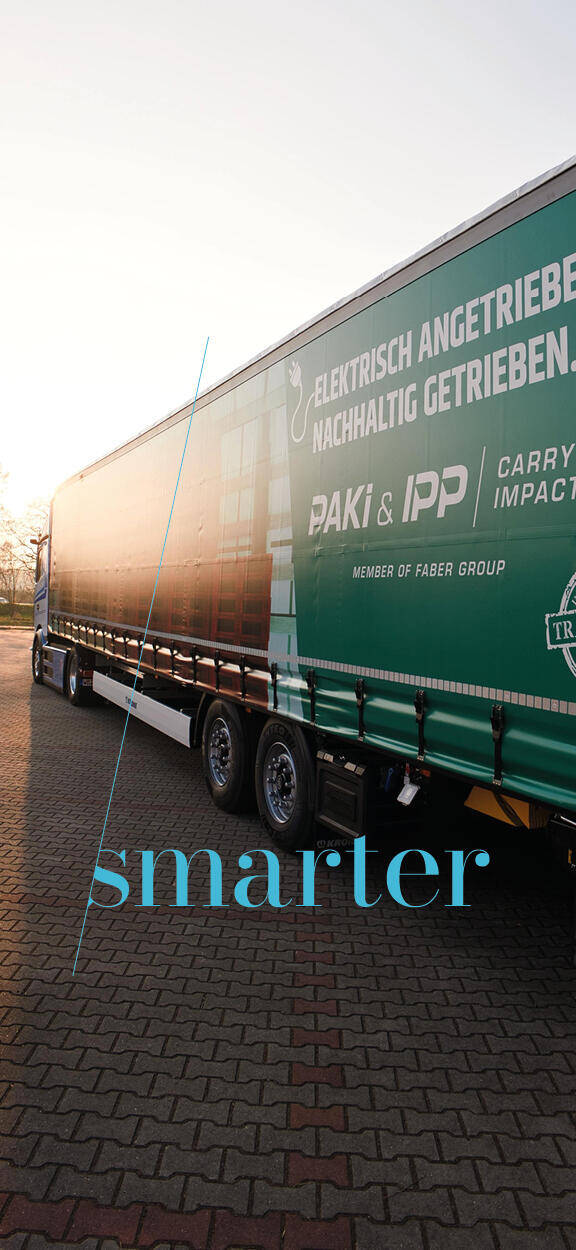
To accelerate decarbonization, we’ve started working with haulers using HVO (Hydrotreated Vegetable Oil) as a lower-carbon alternative to diesel. PAKi Logistics & IPP in Germany are partnering with Scholz Transporte using HVO as alternative fuel and in 2025 HVO has been introduced at our PRS operations. This transition has been enabled through a coordinated, market-driven approach:
Conducting market analysis to identify viable HVO supply opportunities, embedding HVO requirements into transport tenders, collaborating with carriers to increase HVO adoption across the network and establishing a structured roadmap to scale usage over time.
The increased share of HVO fuel has reduced lifecycle emissions from transport while maintaining operational reliability, demonstrating the importance of supply chain collaboration in fuel transition.
HVO Integration in PRS
Spotlight 2: Alternative Fuels
The IPP Iberia team achieved the Lean & Green 4-star certification, recognising significant progress in reducing transport emissions and improving logistics efficiency. To reach this milestone, the team implemented a series of targeted initiatives:
• Reducing transport kilometres through optimised routing and planning
• Pool management optimisation, improving asset utilisation across the network
• Stronger collaboration with hauliers, increasing the efficiency and utilisation of available fleets
These combined initiatives have delivered measurable emissions reductions while strengthening regional supply chain performance.
Beyond the operational gains, achieving Lean & Green certification demonstrates how structured logistics programmes can directly link sustainability targets with performance improvements. By setting clear benchmarks, tracking progress, and encouraging continuous optimisation, such certifications act as both a framework for accountability and a driver of efficiency, ensuring that environmental improvements go hand in hand with better service levels and cost performance.
IPP Iberia Lean & Green 4-Star
Spotlight 1: Certification Achievement
Globally, freight transport accounted for approximately 10% of energy-related CO₂ emissions and 43% of total transport-related CO₂ emissions in 2023. Road freight alone contributed around 70% of freight transport emissions, making it the primary focus for decarbonisation efforts (reference as Transport, Climate and Sustainability Global Status Report, 4th edition, 2025).
The environmental challenge is clear: reducing emissions while maintaining or improving operational efficiency. To address this, organisations can activate several key levers:
Network optimisation: reducing unnecessary kilometres through smarter routing and regional sourcing
Asset efficiency: minimising empty miles and improving load utilisation
Fuel transition: adopting lower-carbon fuels such as HVO and electrification
Collaboration: working across supply chains to unlock shared efficiencies
Innovation: piloting and scaling new technologies and operating models
The following spotlight examples demonstrate how these levers are being applied across the Faber Group network to deliver measurable sustainability outcomes.
These examples show that sustainable logistics is not driven by a single solution, but by a combination of optimisation, innovation, fuel transition, and collaboration. Every kilometre in the supply chain matters. By rethinking how transport is planned and executed, organisations can achieve meaningful emissions reductions while building more efficient, resilient logistics networks.
Transport is the backbone of logistics, enabling the movement of goods across supply chains from suppliers to customers and back again. However, it is also one of the most significant contributors to environmental impact within logistics operations.
Sustainability Progress Report | 2025