chapter five
People & Society

Growing stronger,
together


Faber Group conducts business with integrity and maintains a zero-tolerance approach to discrimination, harassment, and unethical behaviour.
We support this through:
Our General Business Principles
Mandatory training on ethics and anti-harassment
The Your Voice anonymous reporting platform
This platform enables employees, partners, and customers to raise concerns safely. All reported incidents are reviewed and addressed in line with internal procedures, with corrective actions taken where necessary.
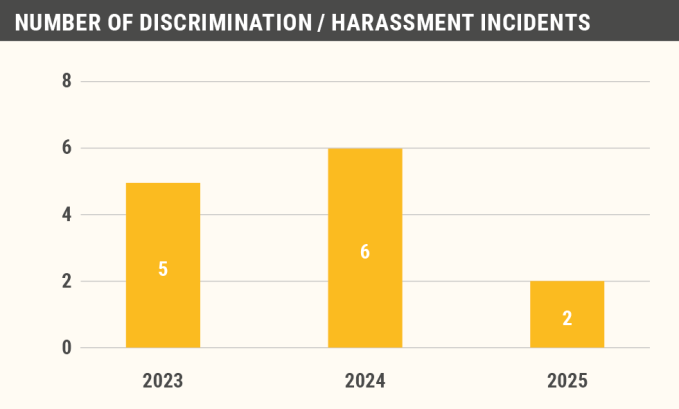
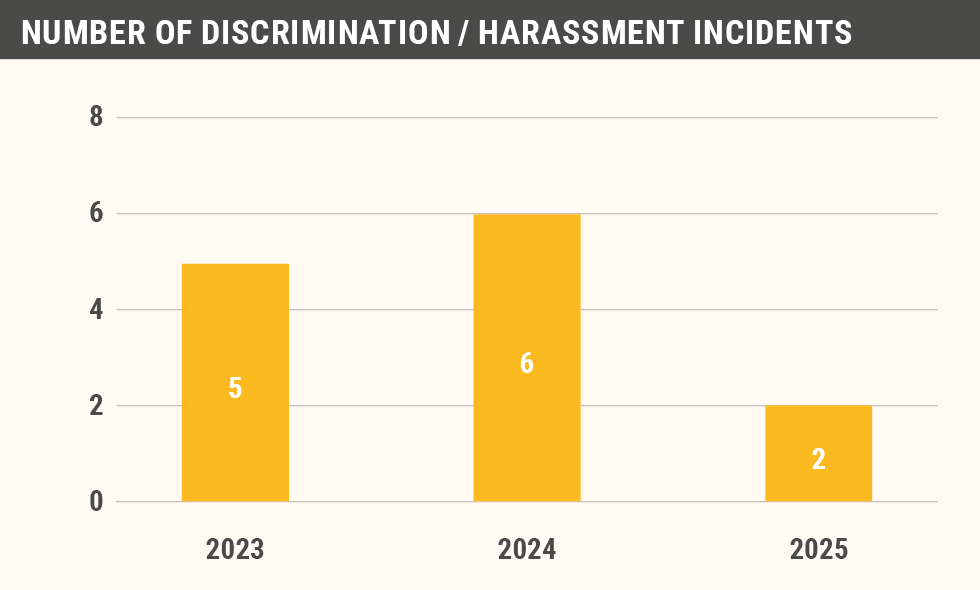
We monitor reported incidents. Trends for the period 2023–2025 are included in the accompanying graphs.
Non-discrimination and ethics
As Faber Group subsidiaries frequently subcontract activities, we extend our safety and health standards to suppliers. Our Supplier Code of Conduct defines clear expectations, while safety requirements are embedded in contracts and monitored through audits. For example, PRS conducts annual onsite depot audits, and initiatives such as the Care 4 Depots roadshow promote improved working conditions across the value chain.
Supplier safety & health
Faber Group prioritizes creating a safe, healthy, and inspiring work environment for all employees and contractors. Absenteeism rates have remained relatively stable over recent years, at 3.4% in 2024 and 3.5% in 2025 (excluding parental leave), progressing towards our target of below 3% by 2030. In 2025, we recorded zero work-related accidents and zero fatalities. To eliminate or reduce work-related hazards, Faber Group applies measures such as safe and ergonomic workplace design, supplier safety requirements, onsite audits, and continuous monitoring and improvement of safety performance.
We invest in:
Safe and ergonomic workplaces
Initiatives supporting mental and physical wellbeing
Continuous monitoring and improvement of safety performance
Health, safety and wellbeing
In our dynamic and growing pooling business, employee engagement is a key driver of success. As in previous years, we follow up on engagement survey results with local engagement days across all entities and countries. These sessions facilitate open dialogue with employees and help define concrete improvement actions.
In 2025, our engagement survey overall score (eNPS) decreased from 25 to 13. This decrease is related to organizational changes during the measurement period, which includes colleagues who became redundant. Therefore, this score partly reflects a temporary transition effect and not the structural situation. We remain committed to reaching our target of 33 by 2030.
In 2026, we further strengthen our approach by implementing a continuous feedback solution, enabling more frequent and actionable insights.
Employee engagement
We continue to invest in the development of our people, strengthening both functional and leadership capabilities across the organization.
Training investment has increased with average training spend per employee rising from €808 in 2023 to €1,019 in 2024. In 2025 the average training spend was €1,043.
Our learning approach combines targeted initiatives tailored to business needs with training programmes. These programmes include both group-wide and division-specific initiatives and were available across relevant entities and employee groups. Examples include:
Skills matrices within IPP
Training catalogues in PAKi and vPOOL
Training programmes focused on digital mindset and AI
In addition, we partnered with Kennedy Fitch to define leadership dimensions across the group. Based on a 360-degree feedback process, we run two dedicated programmes:
Emerging Leader Programme
Future Executive Programme
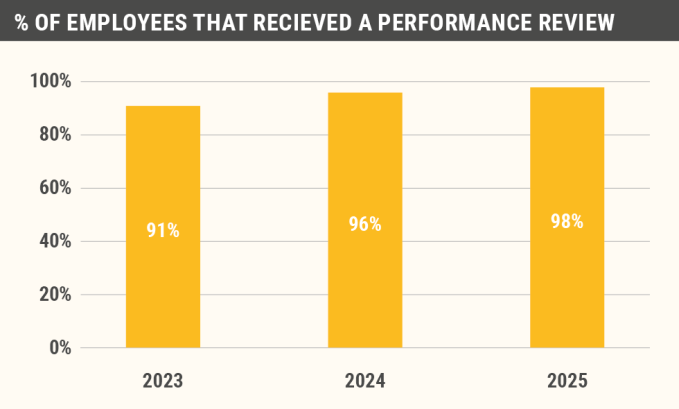
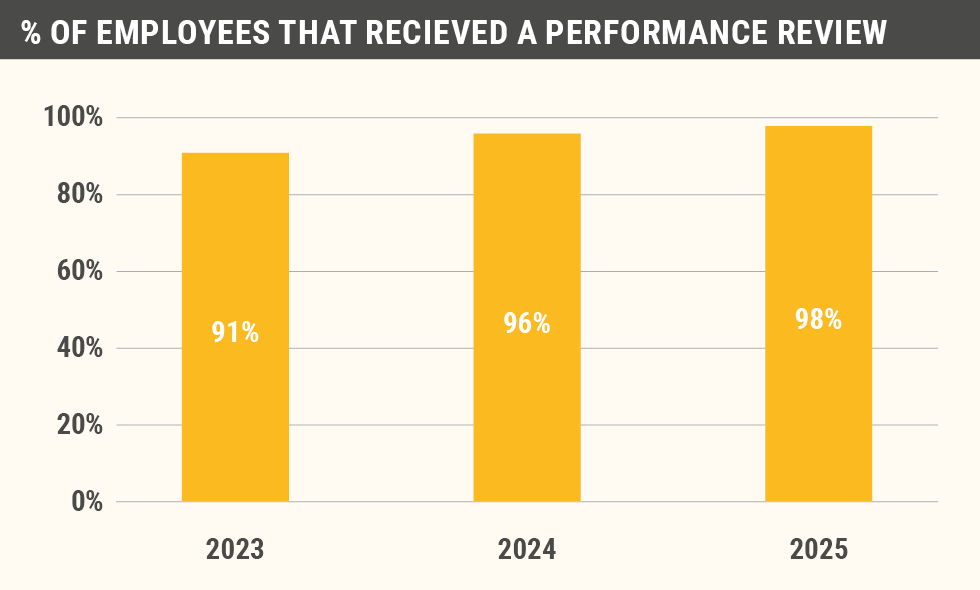
Approximately 50 participants are currently engaged in these programmes. We monitor performance reviews, and development activities to ensure that employees across all levels have access to growth opportunities. Trends over the period 2023–2025 are included in the corresponding graphs.
Training and development
Creating opportunities for employees to develop themselves is a core priority at Faber Group. We support this through our People Cycle, which includes performance reviews, talent reviews, and succession planning.
During these processes, we actively discuss employee ambitions, identify high-potential employees, and define successors for key positions. This structured approach supports both individual development and organizational continuity.
Our focus on career development and internal progression contributes directly to retention and engagement across the group.
Career management
At the same time, we recognize that further improvement is needed at senior levels. Increasing gender balance in top management and governance bodies remains a key focus area.
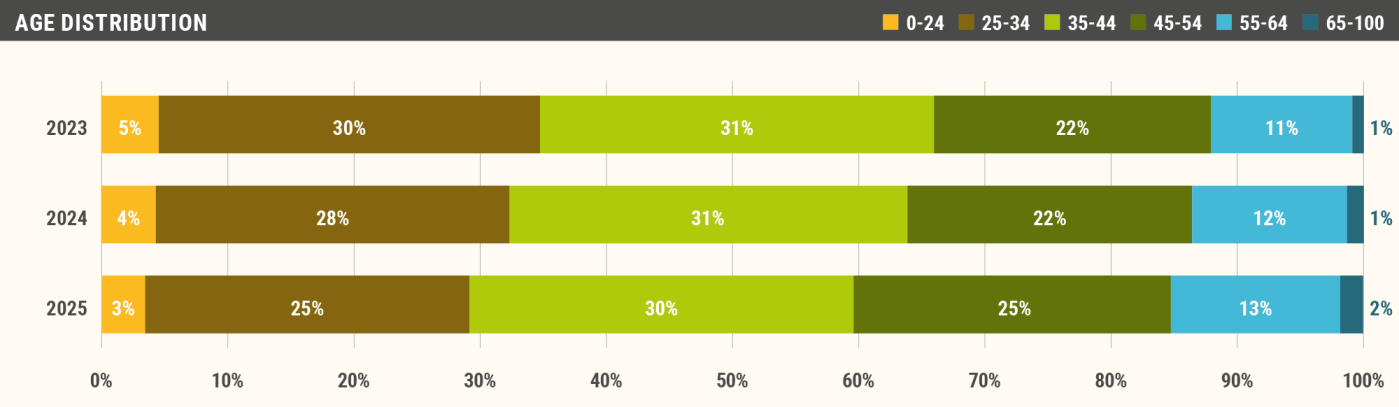
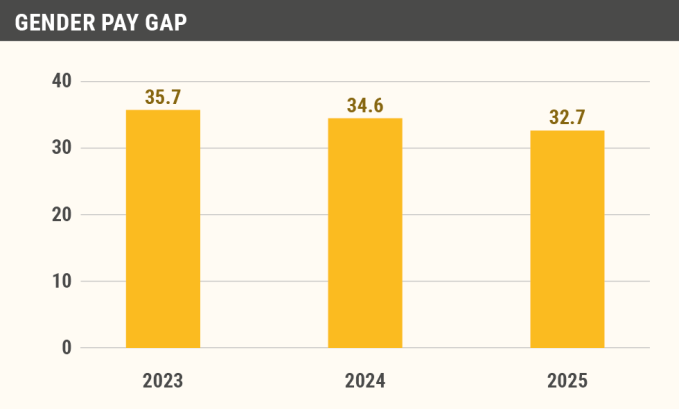
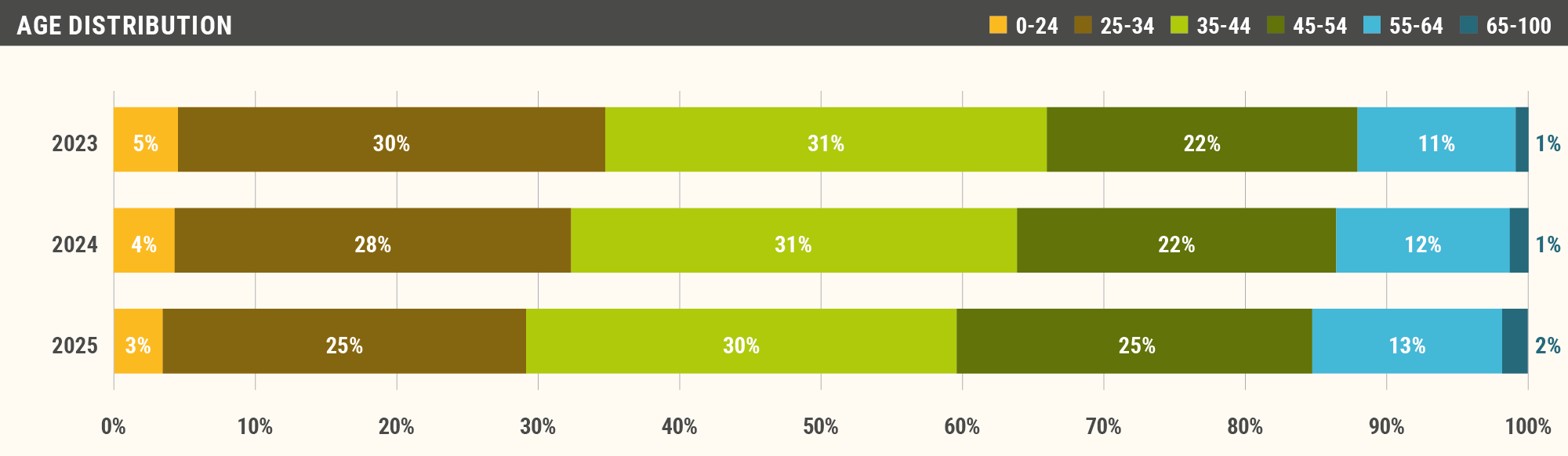
We also continue to increase transparency in diversity-related indicators, including gender distribution across roles, age distribution, and the gender pay gap, to support equal opportunity across the organization.

We are committed to fostering a diverse and inclusive culture where employees feel respected, valued, and able to express themselves authentically.
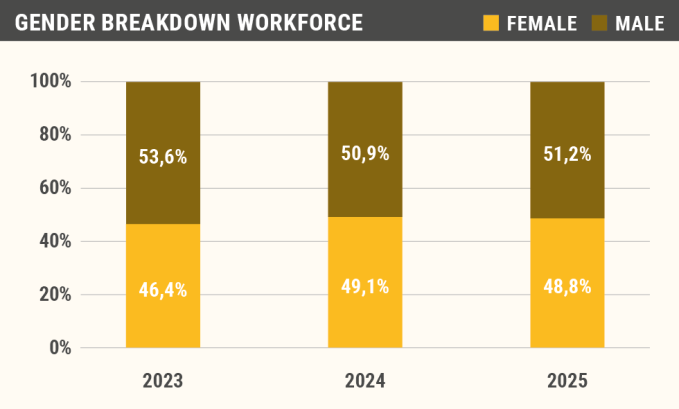
Our workforce remains gender-balanced, with 51,5% male and 48,5% female representation, and an average age of 41, reflecting a healthy mix of experience and new talent.
We have made a slight increase in gender representation in leadership. The share of women in management increased to 30% in 2025, while female representation at senior leadership level (director and C-level) decreased slightly to 14% in 2025. We continue to build on this progress in 2026.
Diversity and inclusion
Faber Group employs a stable and diverse workforce across its operating regions. Over recent years, we have focused on strengthening employee retention, internal mobility, and long-term employability.
We have seen a continued improvement in retention, increasing from 83.5% in 2023 to 83.6% in 2024 and 87.7% in 2025 reflecting the impact of our investments in employee engagement and development. We continue to build on this progress in 2026, with the ambition to stay above our target of 88% by 2030.
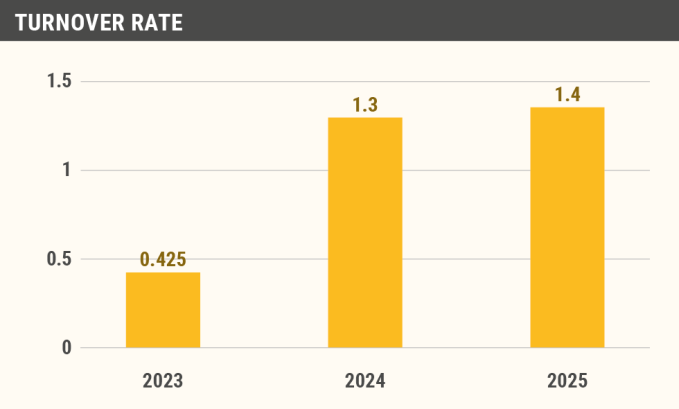
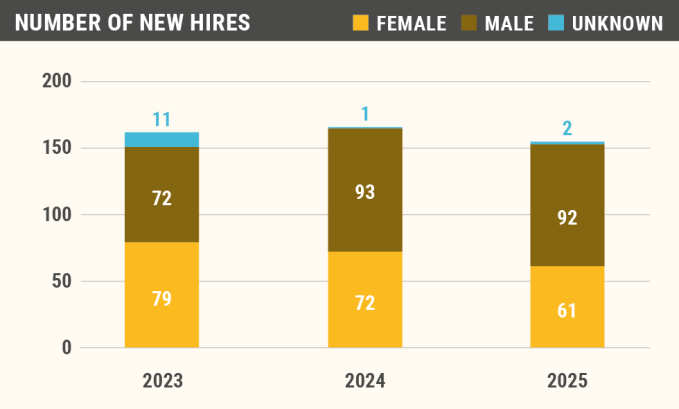
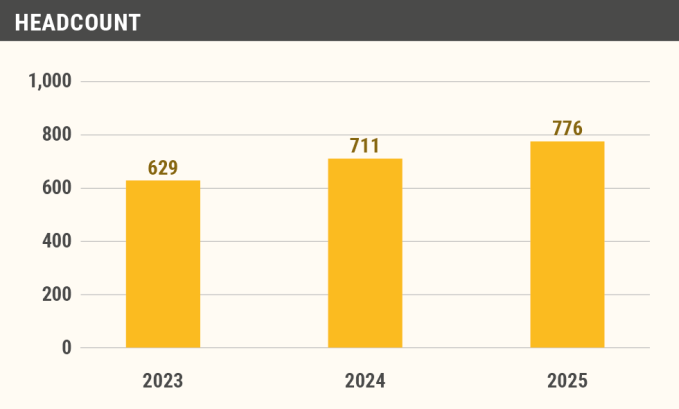
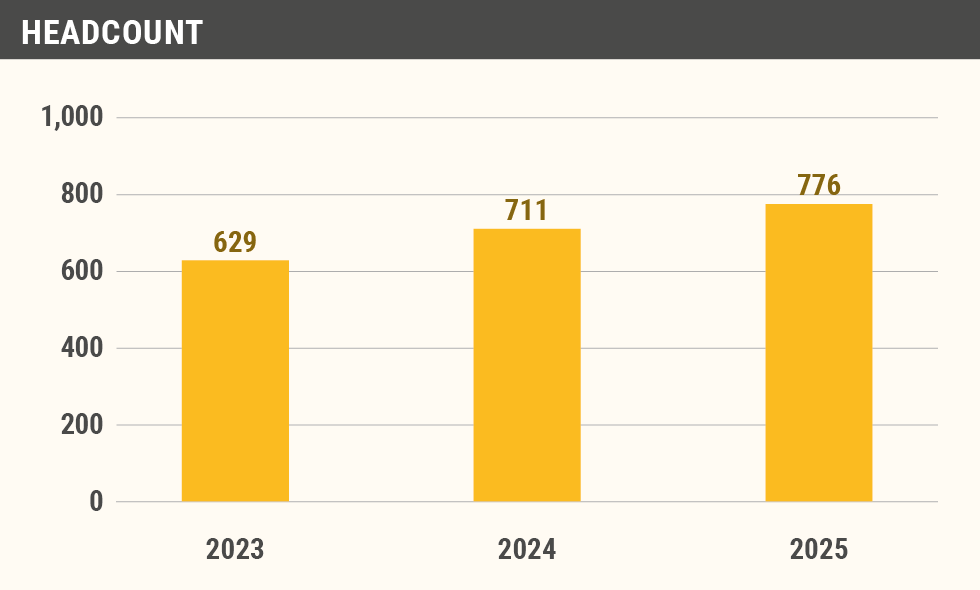
We continuously monitor headcount, hiring, and employee turnover, ensuring a balanced workforce and sustainable growth across our operations. These trends over the period 2023–2025 are presented in the accompanying graphs.
Our workforce
At Faber Group, we care for our people and society, as such we have defined People and Culture as a key enabler for our overall company strategy. We are committed to creating a safe, inclusive, and inspiring work environment that enables employees to grow and perform at their best throughout their careers. Our approach is embedded in strategy, culture, values, policies, the People Cycle, and continuous monitoring of key performance indicators.
Sustainability Progress Report | 2025
chapter five
People & Society
Growing stronger,
together


At the same time, we recognize that further improvement is needed at senior levels. Increasing gender balance in top management and governance bodies remains a key focus area.
We also continue to increase transparency in diversity-related indicators, including gender distribution across roles, age distribution, and the gender pay gap, to support equal opportunity across the organization.
Faber Group conducts business with integrity and maintains a zero-tolerance approach to discrimination, harassment, and unethical behaviour.
We support this through:
Our General Business Principles
Mandatory training on ethics and anti-harassment
The Your Voice anonymous reporting platform
This platform enables employees, partners, and customers to raise concerns safely. All reported incidents are reviewed and addressed in line with internal procedures, with corrective actions taken where necessary.
We monitor reported incidents. Trends for the period 2023–2025 are included in the accompanying graphs.
Non-discrimination and ethics
As Faber Group subsidiaries frequently subcontract activities, we extend our safety and health standards to suppliers. Our Supplier Code of Conduct defines clear expectations, while safety requirements are embedded in contracts and monitored through audits. For example, PRS conducts annual onsite depot audits, and initiatives such as the Care 4 Depots roadshow promote improved working conditions across the value chain.
Supplier safety & health
Faber Group prioritizes creating a safe, healthy, and inspiring work environment for all employees and contractors. Absenteeism rates have remained relatively stable over recent years, at 3.4% in 2024 and 3.5% in 2025 (excluding parental leave), progressing towards our target of below 3% by 2030. In 2025, we recorded zero work-related accidents and zero fatalities. To eliminate or reduce work-related hazards, Faber Group applies measures such as safe and ergonomic workplace design, supplier safety requirements, onsite audits, and continuous monitoring and improvement of safety performance.
We invest in:
Safe and ergonomic workplaces
Initiatives supporting mental and physical wellbeing
Continuous monitoring and improvement of safety performance
Health, safety and wellbeing
In our dynamic and growing pooling business, employee engagement is a key driver of success. As in previous years, we follow up on engagement survey results with local engagement days across all entities and countries. These sessions facilitate open dialogue with employees and help define concrete improvement actions.
In 2025, our engagement survey overall score (eNPS) decreased from 25 to 13. This decrease is related to organizational changes during the measurement period, which includes colleagues who became redundant. Therefore, this score partly reflects a temporary transition effect and not the structural situation. We remain committed to reaching our target of 33 by 2030.
In 2026, we further strengthen our approach by implementing a continuous feedback solution, enabling more frequent and actionable insights.
Employee engagement
We continue to invest in the development of our people, strengthening both functional and leadership capabilities across the organization.
Training investment has increased with average training spend per employee rising from €808 in 2023 to €1,019 in 2024. In 2025 the average training spend was €1,043.
Our learning approach combines targeted initiatives tailored to business needs with training programmes. These programmes include both group-wide and division-specific initiatives and were available across relevant entities and employee groups. Examples include:
Skills matrices within IPP
Training catalogues in PAKi and vPOOL
Training programmes focused on digital mindset and AI
In addition, we partnered with Kennedy Fitch to define leadership dimensions across the group. Based on a 360-degree feedback process, we run two dedicated programmes:
Emerging Leader Programme
Future Executive Programme
Approximately 50 participants are currently engaged in these programmes. We monitor performance reviews, and development activities to ensure that employees across all levels have access to growth opportunities. Trends over the period 2023–2025 are included in the corresponding graphs.
Training and development
Creating opportunities for employees to develop themselves is a core priority at Faber Group. We support this through our People Cycle, which includes performance reviews, talent reviews, and succession planning.
During these processes, we actively discuss employee ambitions, identify high-potential employees, and define successors for key positions. This structured approach supports both individual development and organizational continuity.
Our focus on career development and internal progression contributes directly to retention and engagement across the group.
Career management
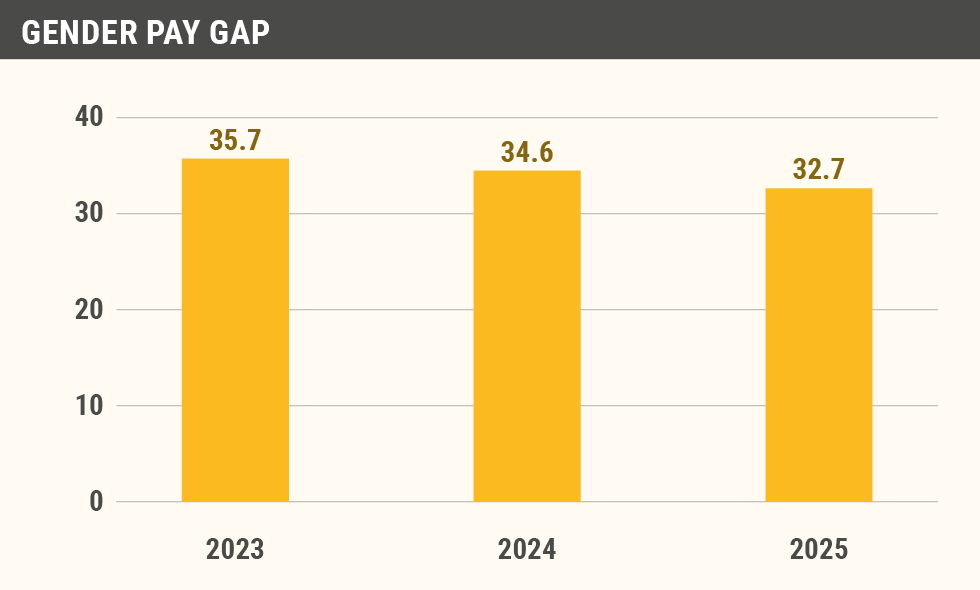
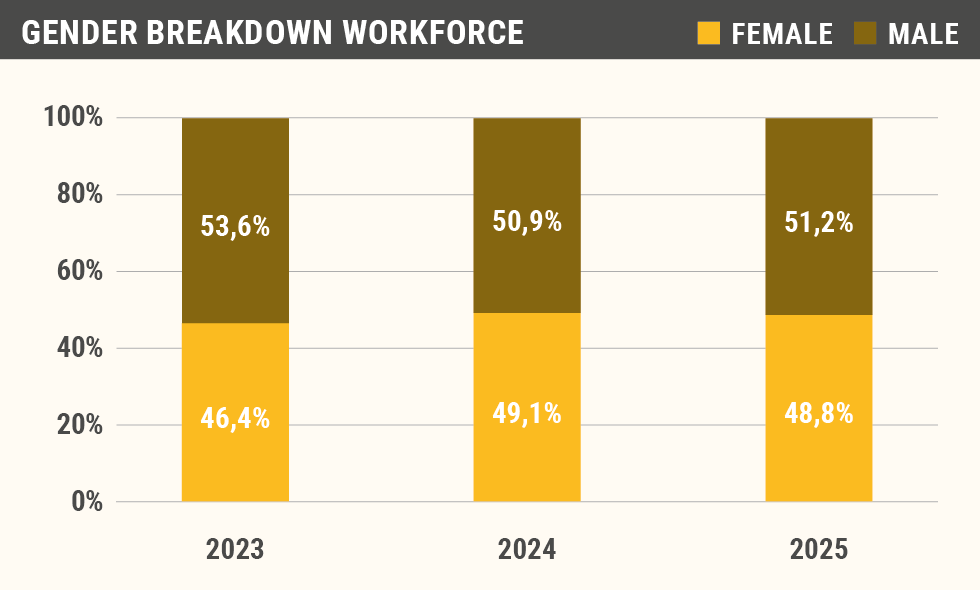

We are committed to fostering a diverse and inclusive culture where employees feel respected, valued, and able to express themselves authentically.
Our workforce remains gender-balanced, with 51,5% male and 48,5% female representation, and an average age of 41, reflecting a healthy mix of experience and new talent.
We have made a slight increase in gender representation in leadership. The share of women in management increased to 30% in 2025, while female representation at senior leadership level (director and C-level) decreased slightly to 14% in 2025. We continue to build on this progress in 2026.
Diversity and inclusion
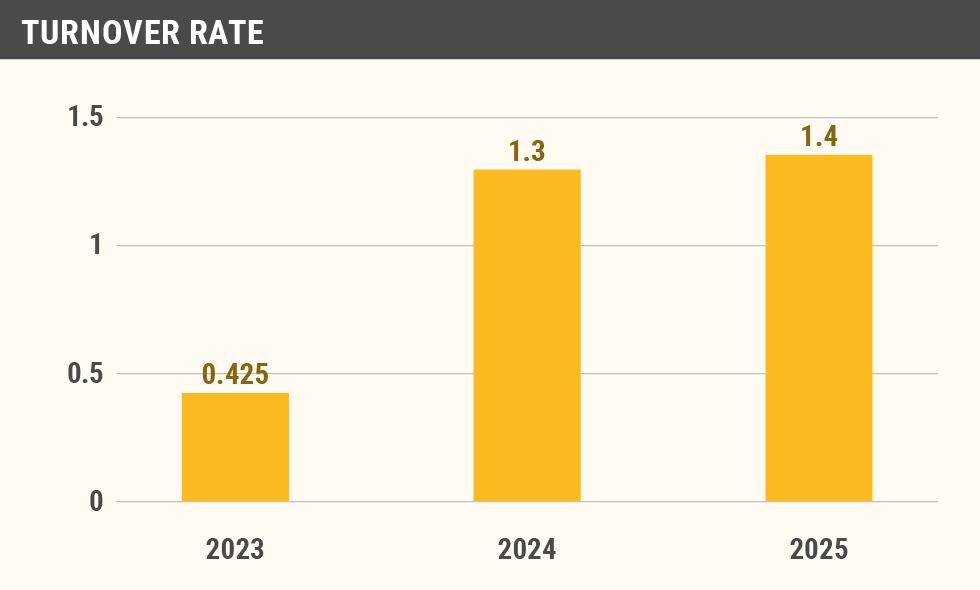
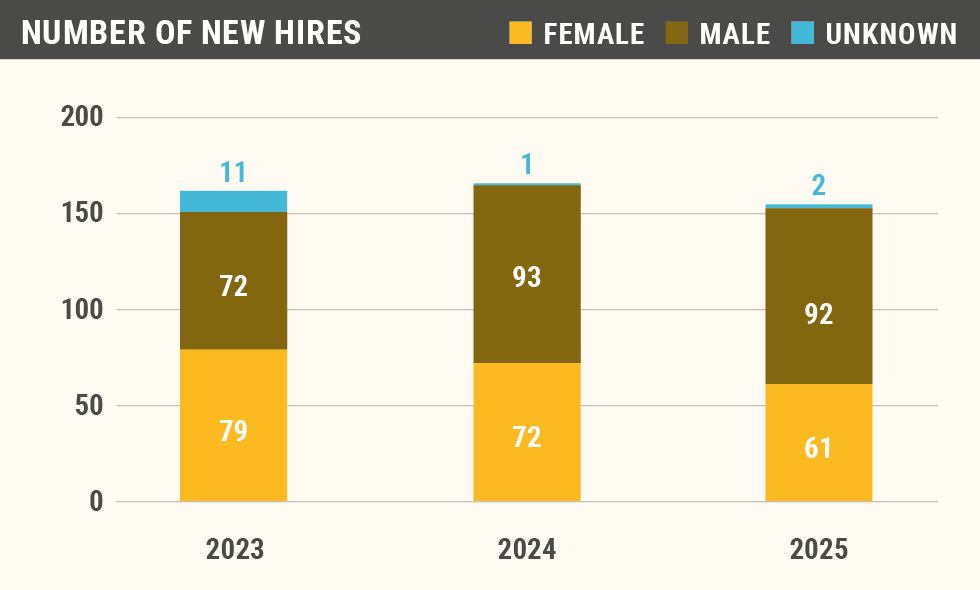
Faber Group employs a stable and diverse workforce across its operating regions. Over recent years, we have focused on strengthening employee retention, internal mobility, and long-term employability.
We have seen a continued improvement in retention, increasing from 83.5% in 2023 to 83.6% in 2024 and 87.7% in 2025 reflecting the impact of our investments in employee engagement and development. We continue to build on this progress in 2026, with the ambition to stay above our target of 88% by 2030.
We continuously monitor headcount, hiring, and employee turnover, ensuring a balanced workforce and sustainable growth across our operations. These trends over the period 2023–2025 are presented in the accompanying graphs.
Our workforce
At Faber Group, we care for our people and society, as such we have defined People and Culture as a key enabler for our overall company strategy. We are committed to creating a safe, inclusive, and inspiring work environment that enables employees to grow and perform at their best throughout their careers. Our approach is embedded in strategy, culture, values, policies, the People Cycle, and continuous monitoring of key performance indicators.
Sustainability Progress Report | 2025