chapter four
Environment

In balance
with nature



Our impact on biodiversity is primarily linked to the sourcing of wood and the management of material flows. By reducing the demand for new materials through circular use and ensuring responsible sourcing of wood, we limit our impact on ecosystems.
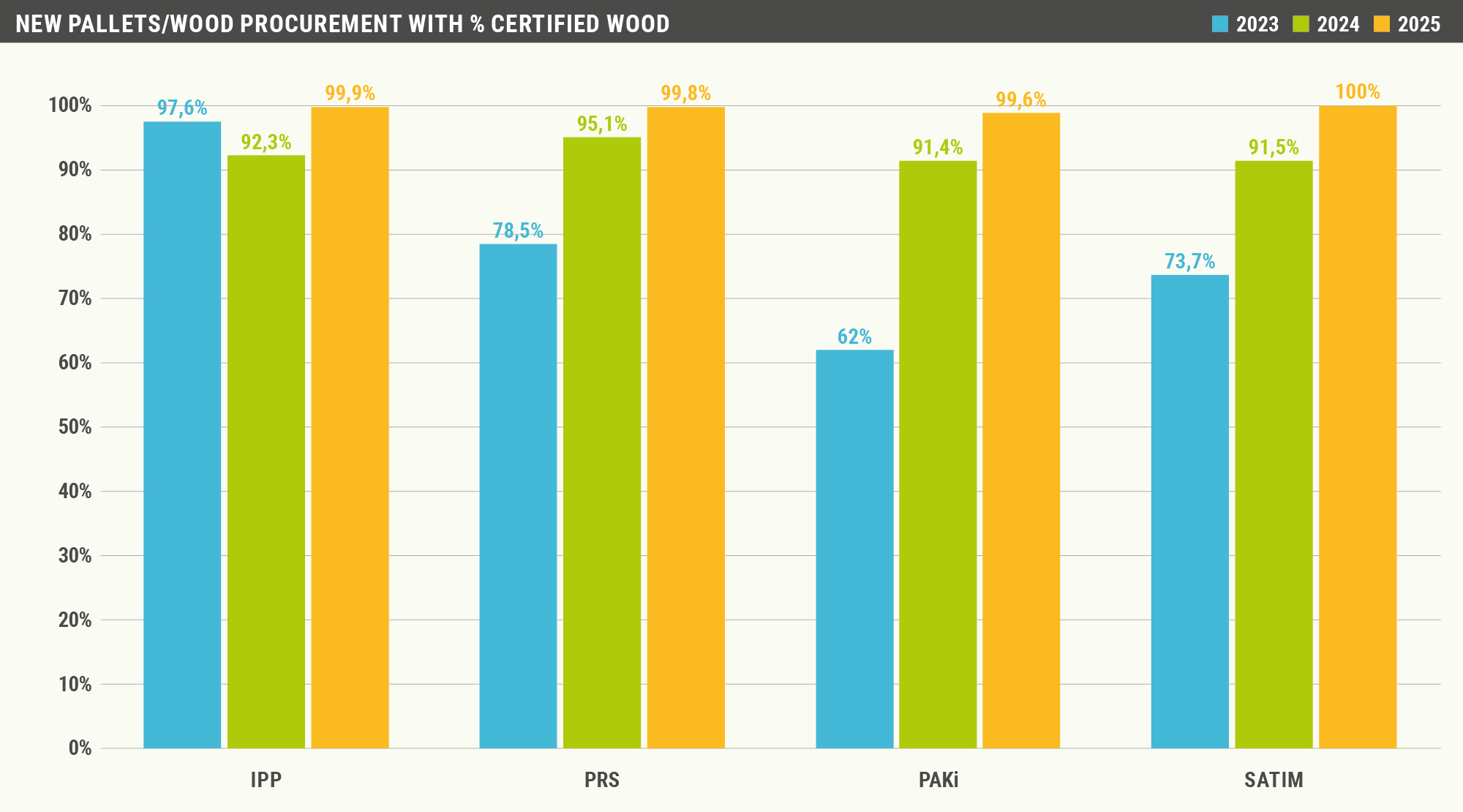
The use of FSC and PEFC certified wood plays an important role in safeguarding sustainable forest management and protecting biodiversity. Our ambition to reach 100% certified wood by 2030 further strengthens this approach.
In addition, we contribute to ecosystem restoration through targeted initiatives. Together with partners such as Land Life, we support reforestation projects across Europe. Over the past years, almost 110,000 trees have been planted, contributing to the restoration of degraded land and supporting biodiversity.
Extending the lifespan of load carriers is a key lever in reducing material use and environmental impact. By increasing reuse, we reduce the demand for new materials and minimise waste generation.
We achieve this by:
increasing recovery and reuse rates of pallets
enhancing traceability through digital solutions
improving repair and maintenance processes
Initiatives such as PRS Green Label, the Connected Load Carrier programme, and pallet recovery campaigns support higher return rates and more efficient use of assets. Technologies such as RFID, QR codes and barcodes improve visibility across the supply chain and help reduce losses.At the end of their lifecycle, load carriers are processed in a responsible way, ensuring materials are reused or recycled where possible.
Biodiversity
Extending product lifespan and reuse
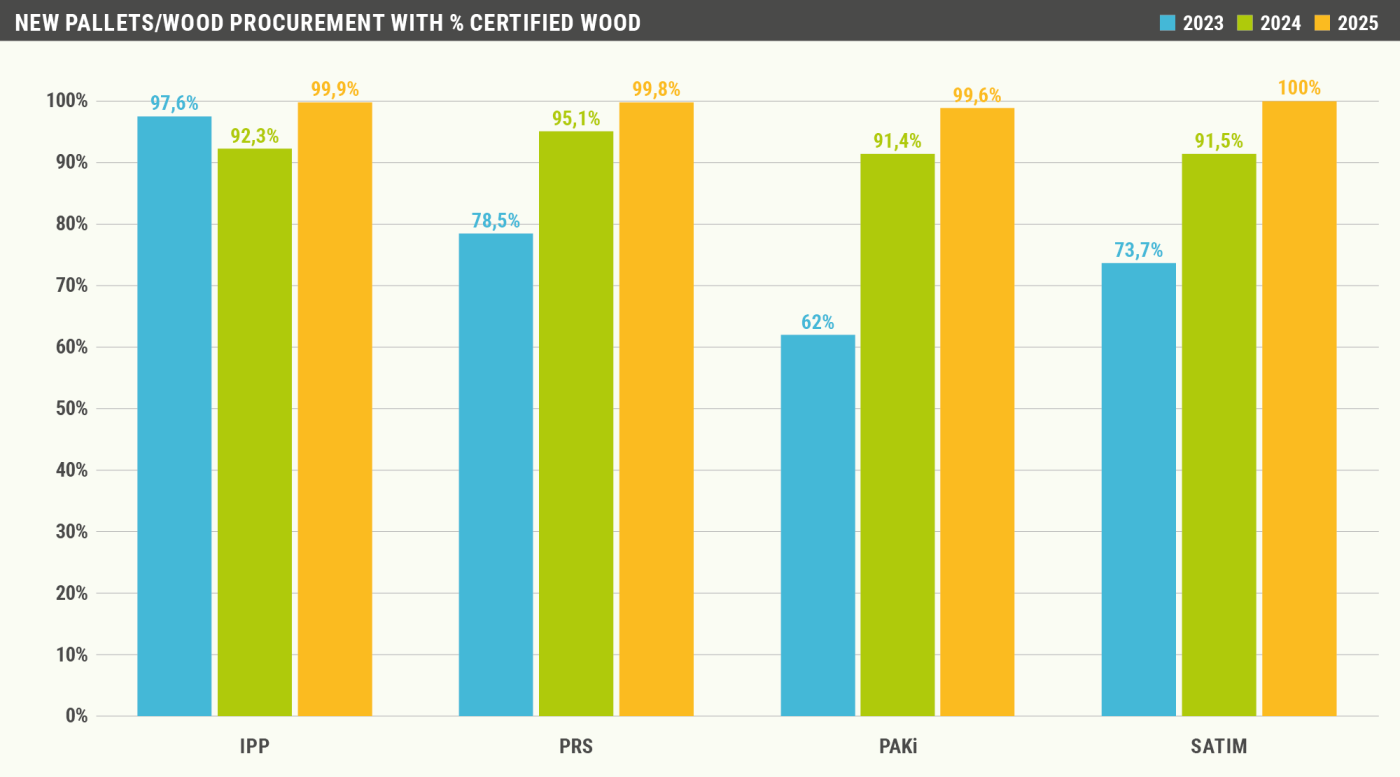
We aim to ensure that the materials we do use are sourced responsibly. A key focus is the use of certified wood in the production of new load carriers.
We have nearly achieved our 2030 target of sourcing 100% FSC/PEFC-certified wood for newly purchased pallets across all divisions. Minor fluctuations between years may occur, for example due to temporary sourcing decisions driven by operational needs.
To further enhance the resilience of our supply chain, we are elevating the sustainability standards of our suppliers through the GREEN30+ programme. This initiative ensures that sustainability considerations are increasingly integrated into our procurement choices and supplier interactions.
Sustainable sourcing of materials
Circularity is at the core of Faber Group’s business model. By operating a pooling system, we maximize the reuse of load carriers and reduce the need for new materials.
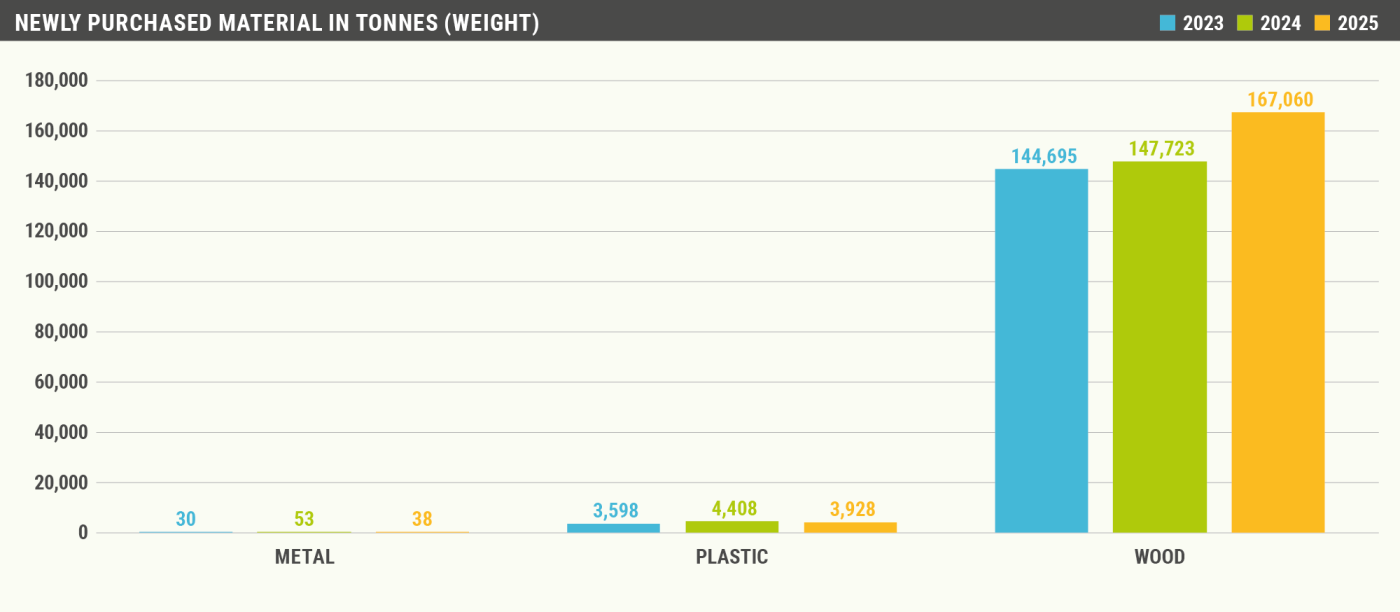
The majority of materials used within our operations consist of wood for load carriers, a renewable source, complemented by smaller volumes of non-renewable sources such as plastics and other materials. As our business grows, the total volume of newly purchased load-carriers increases. Reducing the need for new materials remains a key priority and is closely linked to reuse, improving asset utilisation and extending product lifespan.
Circularity
We quantify avoided emissions using the Guidance on Avoided Emissions published by the World Business Council for Sustainable Development (2023). Emission savings per trip are calculated through comparative Life Cycle Assessments (LCA), conducted in 2023 and 2024 according to ISO 14040/44 standards and subject to peer review. By multiplying the savings per rotation by the total number of trips, we determine the total annual emissions avoided for our customers.
In 2025, our efforts enabled customers to avoid more than 40,000 tonnes of CO₂e, representing an increase of 9% compared to 2023. Our ambition is to increase this to more than 58,000 tonnes of CO₂e annually by 2030.
We continue to grow these avoided emissions by scaling our pooling model and extending its reach. This includes supporting customers in transitioning from one-way load carriers to reusable pooling systems, as well as introducing innovative solutions in traditionally linear markets. An example of this is RUDi (ReUsable Display), developed by IPP Germany, which enables reuse in display applications that were previously based on single-use solutions.
Scope 1 and Scope 2 Emissions: Performance and Drivers
Given that the majority of our emissions occur in Scope 3, reducing emissions across the value chain remains a key priority. Our approach focuses on improving transport efficiency, transitioning to lower-emission transport solutions, and optimising our logistics network.
A key initiative in this area is GREEN30+, Faber Group’s procurement programme designed to accelerate the decarbonisation, competitiveness and resilience of our supply network. Through GREEN30+, we:
embed sustainability criteria into sourcing decisions
collaborate with suppliers to reduce emissions through cleaner transport and energy-efficient operations
improve supply chain performance through lower-carbon logistics and better visibility of environmental data
strengthen collaboration across teams to align sustainability, operational and commercial objectives
By integrating sustainability into procurement and supplier engagement, we aim to deliver measurable reductions in Scope 3 emissions while building a more resilient and efficient supply network.
Energy & carbon footprint reduction in our own operations (Scope 1 & 2)
Although emissions from our own operations represent a relatively small share of our total footprint, we remain committed to reducing energy consumption and associated emissions across our offices and company vehicles, with the ambition to achieve net-zero Scope 1 and 2 emissions by 2030.
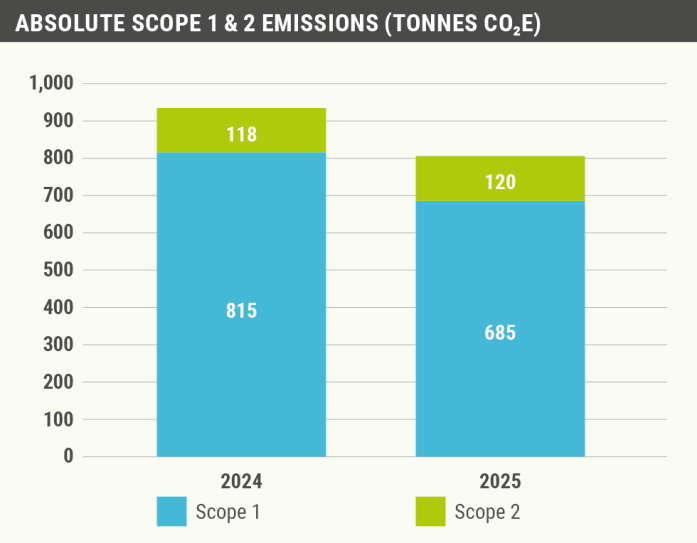
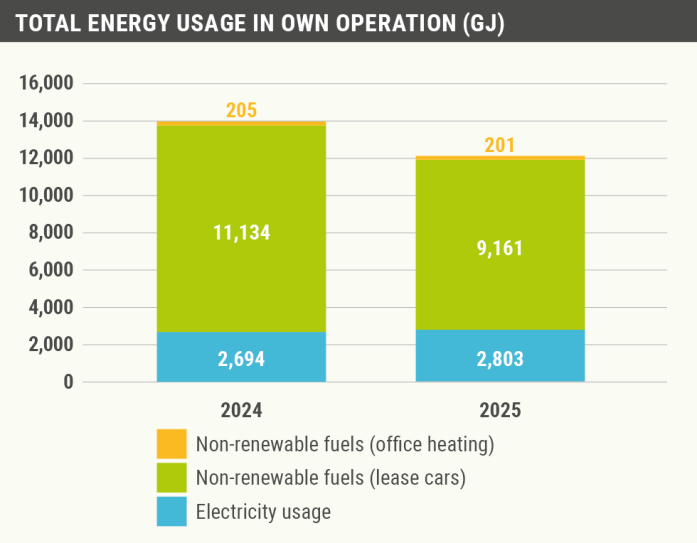
Scope 1 emissions within our operations are primarily associated with fuel consumption from company vehicles and the use of gas in our buildings. Scope 2 emissions result from the purchase of electricity to power our facilities. In 2025, we achieved a reduction in our combined Scope 1 and Scope 2 emissions compared to 2024. This positive outcome is largely attributable to our ongoing transition to an electric vehicle fleet and the implementation of measures to enhance operational efficiency across our sites and activities. Total energy consumption in our own operations decreased from 14,032 GJ in 2024 to 12,165 GJ in 2025. This reflects the impact of ongoing efforts to improve energy efficiency and optimise the use of energy across our operations.
Reducing energy consumption and emissions in our own operations remains a focus, supported by measures such as the transition to an electric vehicle fleet, optimisation of energy use in office buildings, and increased organisational awareness. These actions contribute to a structural reduction in energy consumption and support our broader ambition to reduce greenhouse gas emissions.
Improving our positive impact
Beyond reducing our own operational emissions, we aim to increase the positive impact of our business model by helping our customers lower their carbon footprint. This is achieved by promoting the adoption of our circular pooling system, which delivers substantial carbon savings compared to less sustainable alternatives such as single-use pallets and 1-to-1 exchange systems. We refer to these savings as avoided emissions, or ‘Scope 4’.
Reducing Scope 3 emissions in the value chain
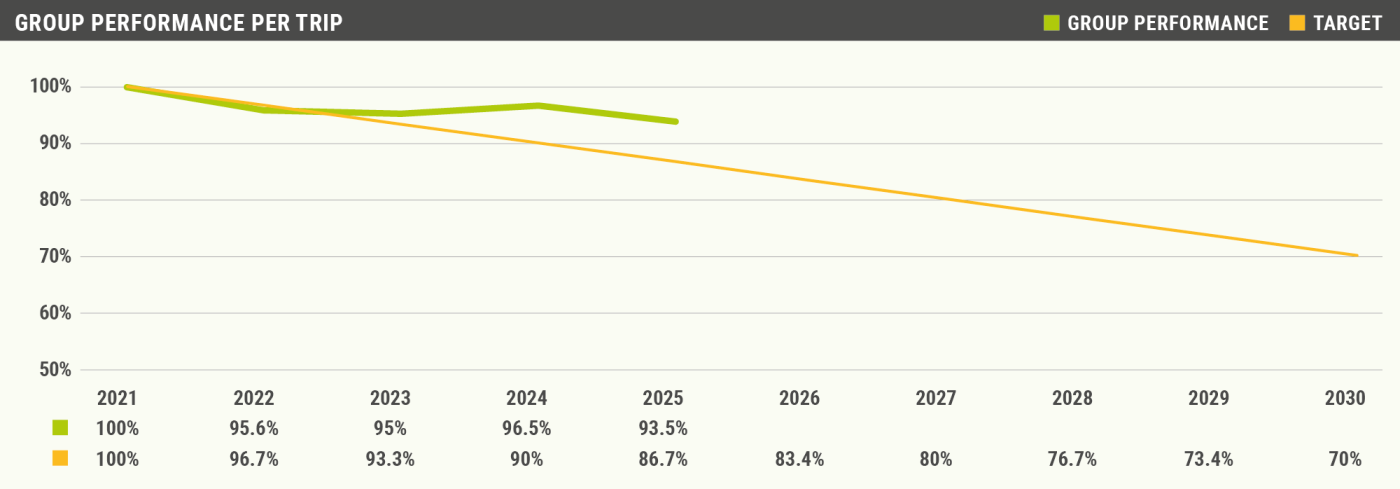
At group level, we monitor emissions intensity against our long-term reduction target towards 2030. Emissions intensity is calculated as a weighted average of the performance of each division, with weighting based on the share of revenue per division.
Overall, the group shows a reduction in emissions intensity compared to the 2021 baseline. While performance fluctuates year-on-year, the general trend indicates progress towards our target, although continued effort is required to stay aligned with the 2030 trajectory.
Group performance and target trajectory
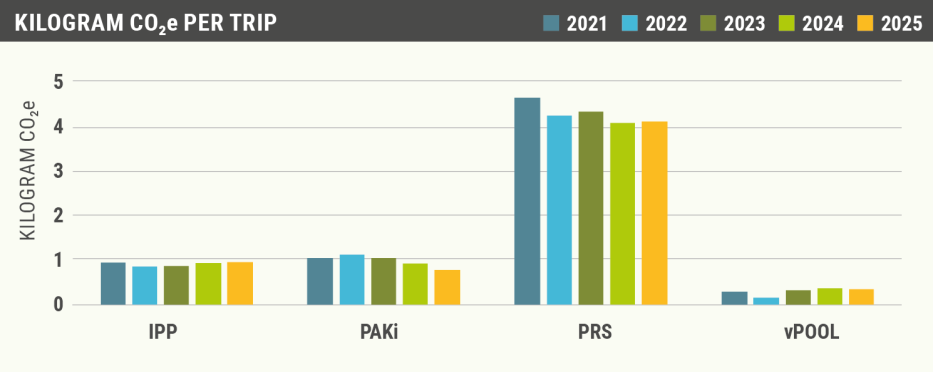
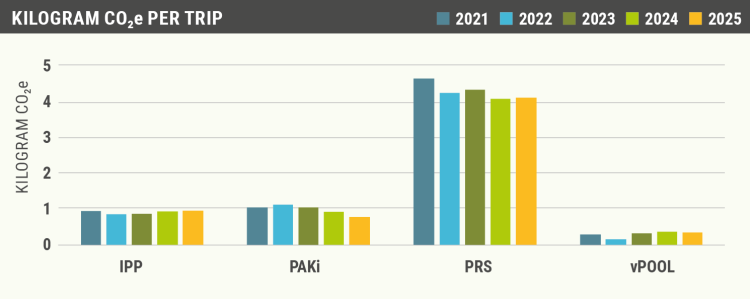
Across the group, emissions intensity has developed differently among divisions. Both PRS and PAKi have achieved a clear and sustained reduction in CO₂e emissions per trip over recent years. This improvement is primarily attributed to a focus on optimising the network, the adoption of cleaner fuels such as HVO diesel, and an increased reliance on intermodal transport solutions. For IPP and vPOOL, emissions intensity fluctuates over time. In the case of vPOOL, this is largely driven by an increase in the purchase of new load carriers, which has a direct impact on Scope 3 emissions. Emissions per trip for IPP remain relatively stable. Despite ongoing sustainability efforts, IPP has expanded into new geographical markets where the network is still developing and therefore less efficient. As a result, the impact of these expansion activities offsets part of the improvements achieved through sustainability initiatives.
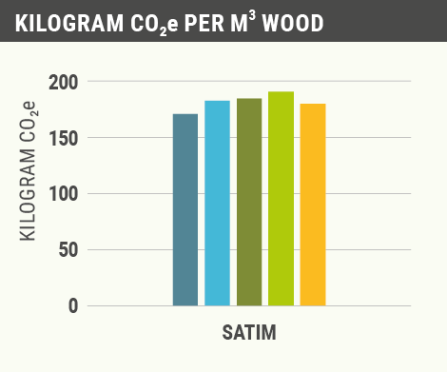
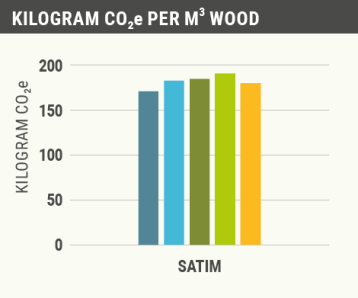
For SATIM, 2025 shows a downward trend, nevertheless, emissions intensity per m³ of wood are still above the 2021 baseline. This is mainly explained by longer transport distances, as wood sourcing shifted to northern Scandinavia. The absolute emissions of SATIM have decreased since 2021.
Reducing energy use and carbon emissions across our value chain (Scope 3)
As we expand our operations, monitoring emissions intensity is essential for assessing our progress towards environmental sustainability. Although overall emissions may rise with increased business activity, evaluating emissions per movement/trip offers a more accurate measure of efficiency gains achieved throughout our value chain.
Within our pooling operations, emissions intensity is tracked as kilograms of CO₂ equivalent per trip. For our wood sourcing activities (SATIM), intensity is measured in kilograms of CO₂ equivalent per cubic metre of wood, allowing us to pinpoint improvements and drive further reductions.
Overall emissions development
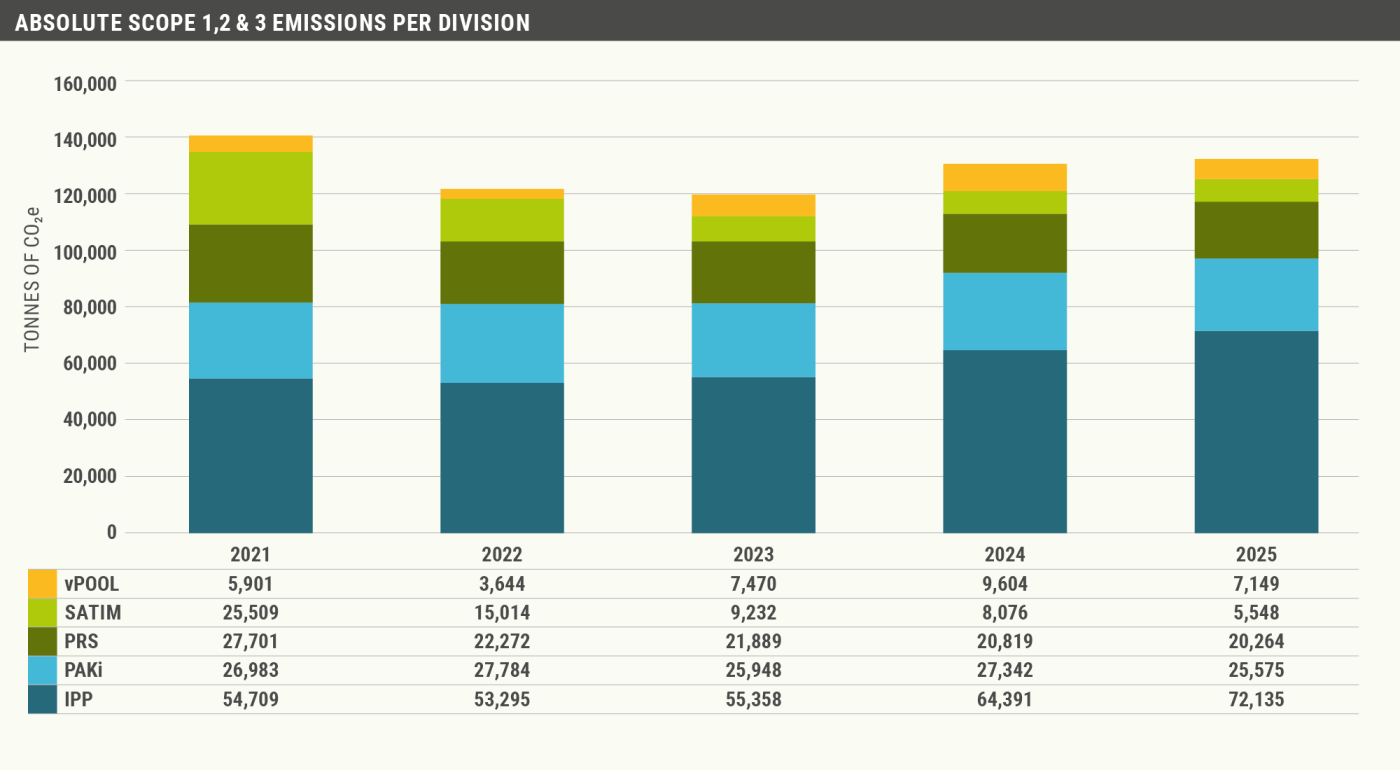
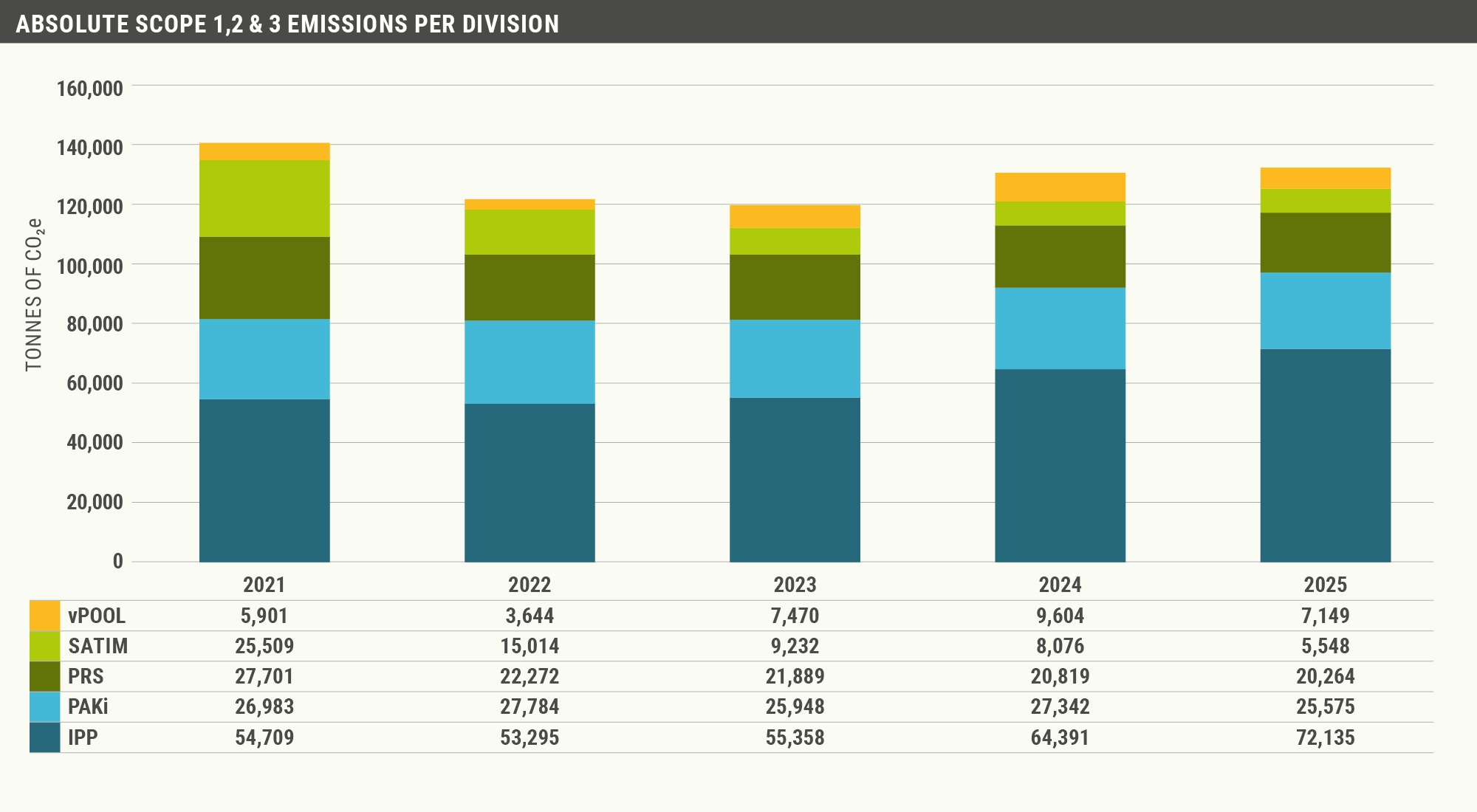
Our absolute greenhouse gas emissions have decreased since 2021. At the same time, the number of trips within our network has increased, reflecting the continued growth of our business and the expansion of our pooling activities. This development highlights the importance of not only monitoring absolute emissions, but also emissions intensity. As our activity levels increase, emissions per unit provide a more meaningful indicator of performance and progress in reducing our impact across the value chain. In the next section, we further elaborate on our emissions intensity target and performance.
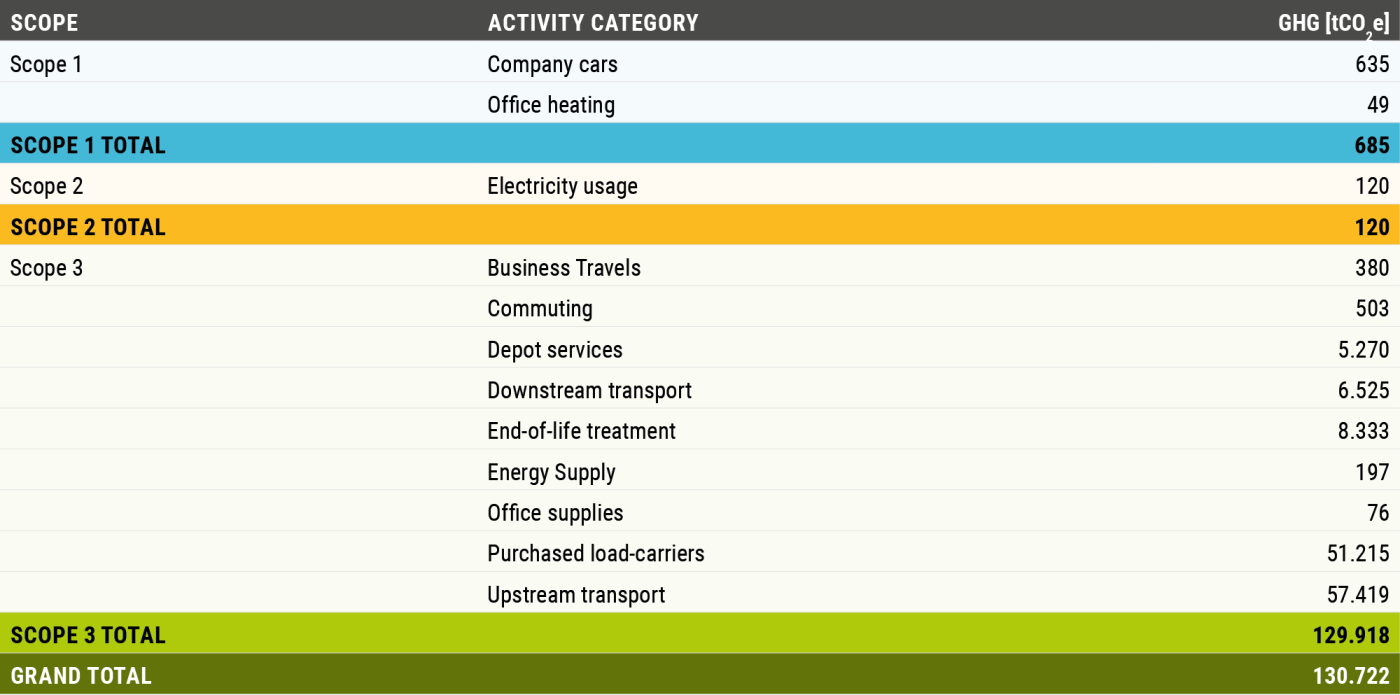
Enhancing transport efficiency and adopting cleaner fuels are key strategies for lowering our environmental footprint. Additionally, a major opportunity for further impact reduction lies in minimising the demand for new load carriers. This can be accomplished by making the most efficient use of the existing pool. Strategies include increasing the frequency of rotations, minimising losses through enhanced digitalisation and improved traceability, and prolonging product life by ensuring proper care, timely repairs, and regular maintenance. By reducing the demand for new load carriers, we also lower the need for raw materials such as wood, thereby reducing our overall environmental impact across the value chain.
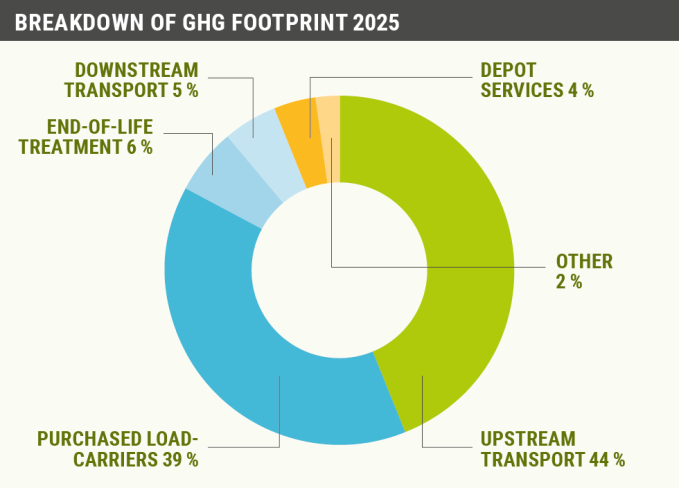
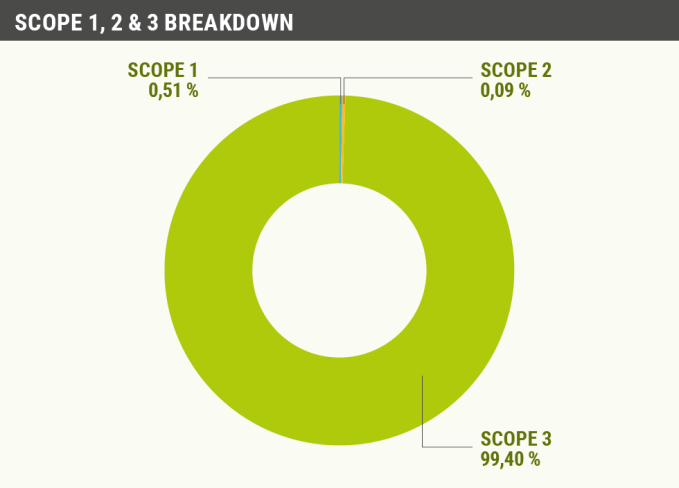
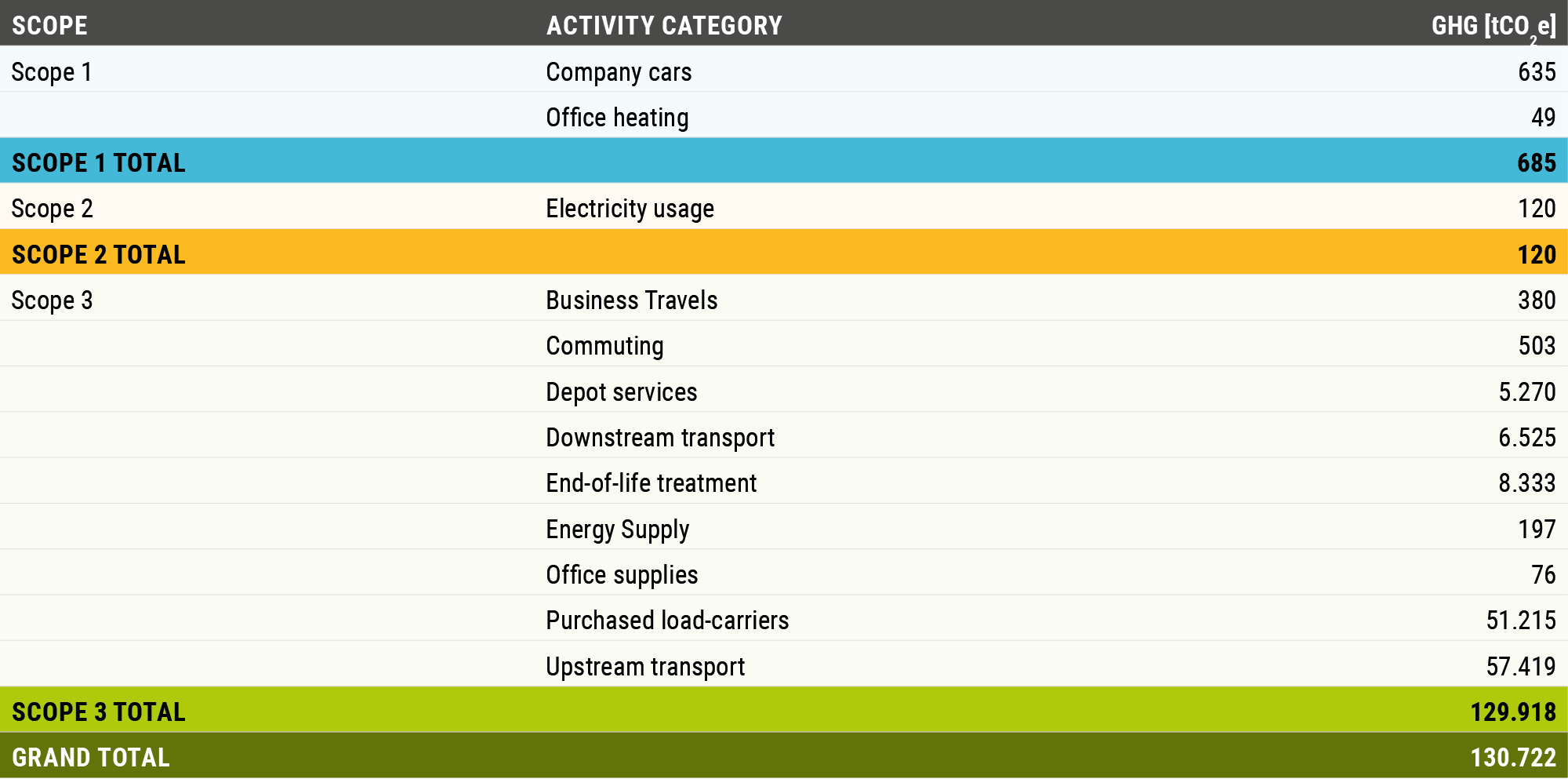
As illustrated in the pie charts below, the majority of our environmental impact comes from Scope 3 and is driven by the production of new load carriers and transport activities (both upstream and downstream). Emissions from Scope 1 and 2, such as offices and lease cars, represent only a small share of the total footprint.
Energy and greenhouse gas data are compiled from internal operational systems, procurement data, logistics data, utility invoices, fuel card data and external supplier information. Greenhouse gas emissions are calculated in accordance with the GHG Protocol. The organisational boundary is based on operational control. Emissions are expressed in CO₂ equivalents (CO₂e) using several emission factor databases such as EcoInvent, GLEC, Defra and Faber specific emission factors calculated from our Life Cycle Assessments. Where relevant, prior-year figures are recalculated to ensure consistency and comparability. For our Scope 3 targets we use 2021 as a base year and for Scope 1 & 2 this is 2024.
Methodology note
Climate change mitigation is a key priority within Faber Group’s environmental strategy. We focus on reducing greenhouse gas (GHG) emissions across our operations and value chain.
Greenhouse gas emissions
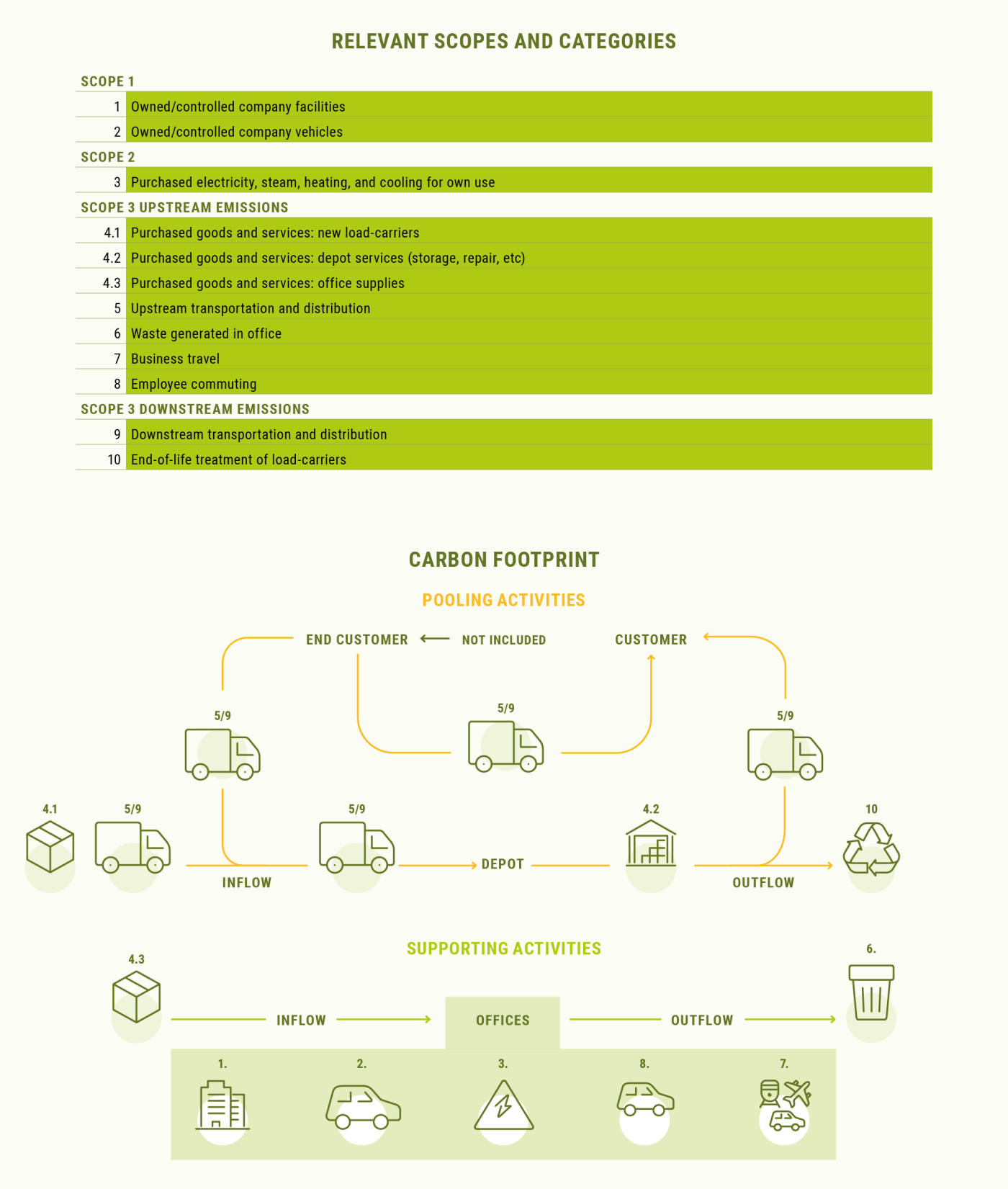
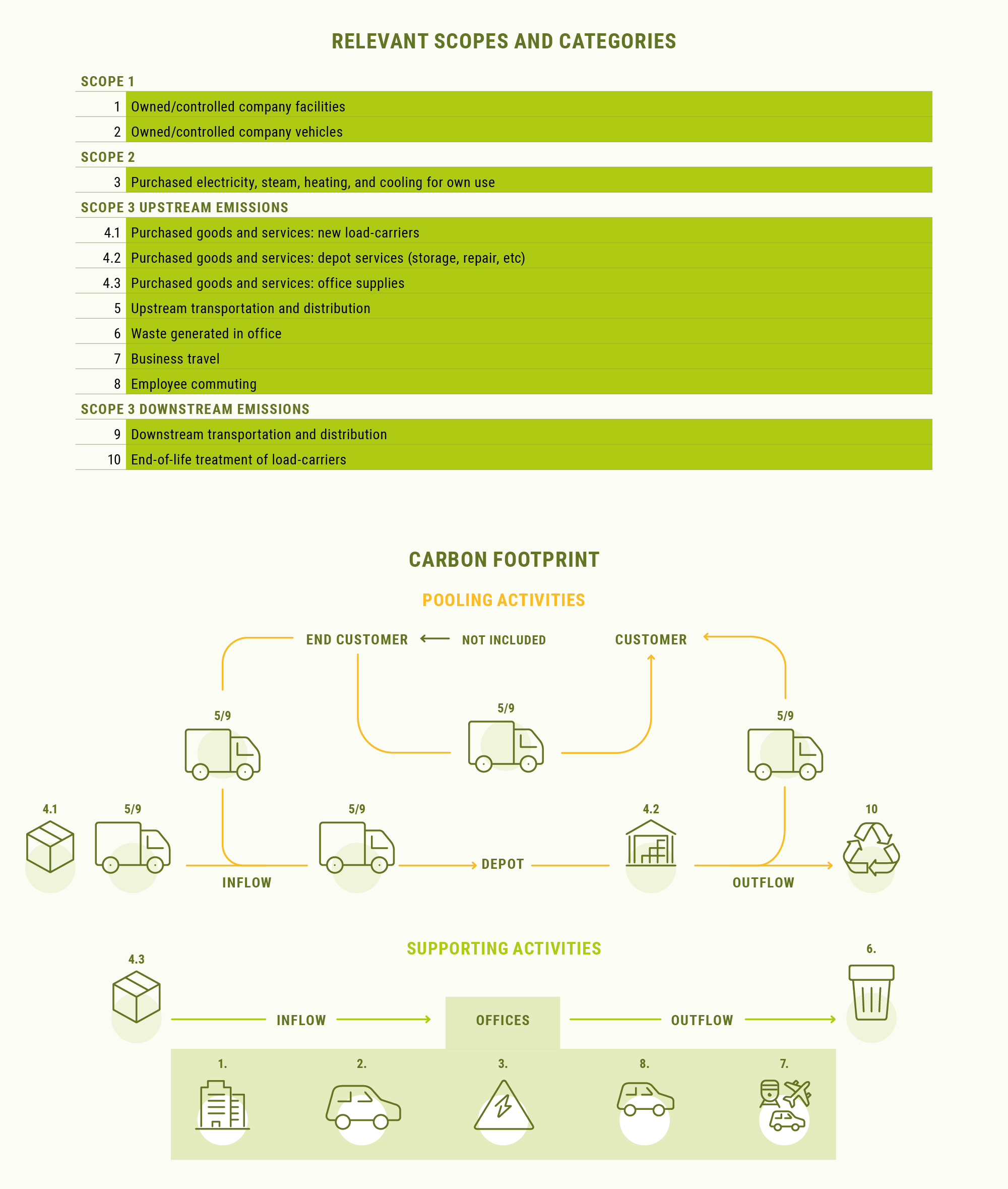
We have mapped all relevant GHG emissions across our business model, as illustrated in the overview on page 21. In this overview, a distinction is made between supporting activities (such as offices and employees) and our core pooling activities. Our carbon footprint for 2024 and 2025 has been externally verified by DEKRA in accordance with ISO 14064-1. The assurance statement for 2025 can be found in appendix II. Our greenhouse gas emissions are reported in line with the GHG Protocol and include:
• Scope 1: direct emissions from owned or controlled sources, such as fuel use in company vehicles and gas consumption in buildings
• Scope 2: indirect emissions from purchased electricity
• Scope 3: all other indirect emissions across the value chain, including the production of load carriers and transport activities
Climate mitigation & energy reduction
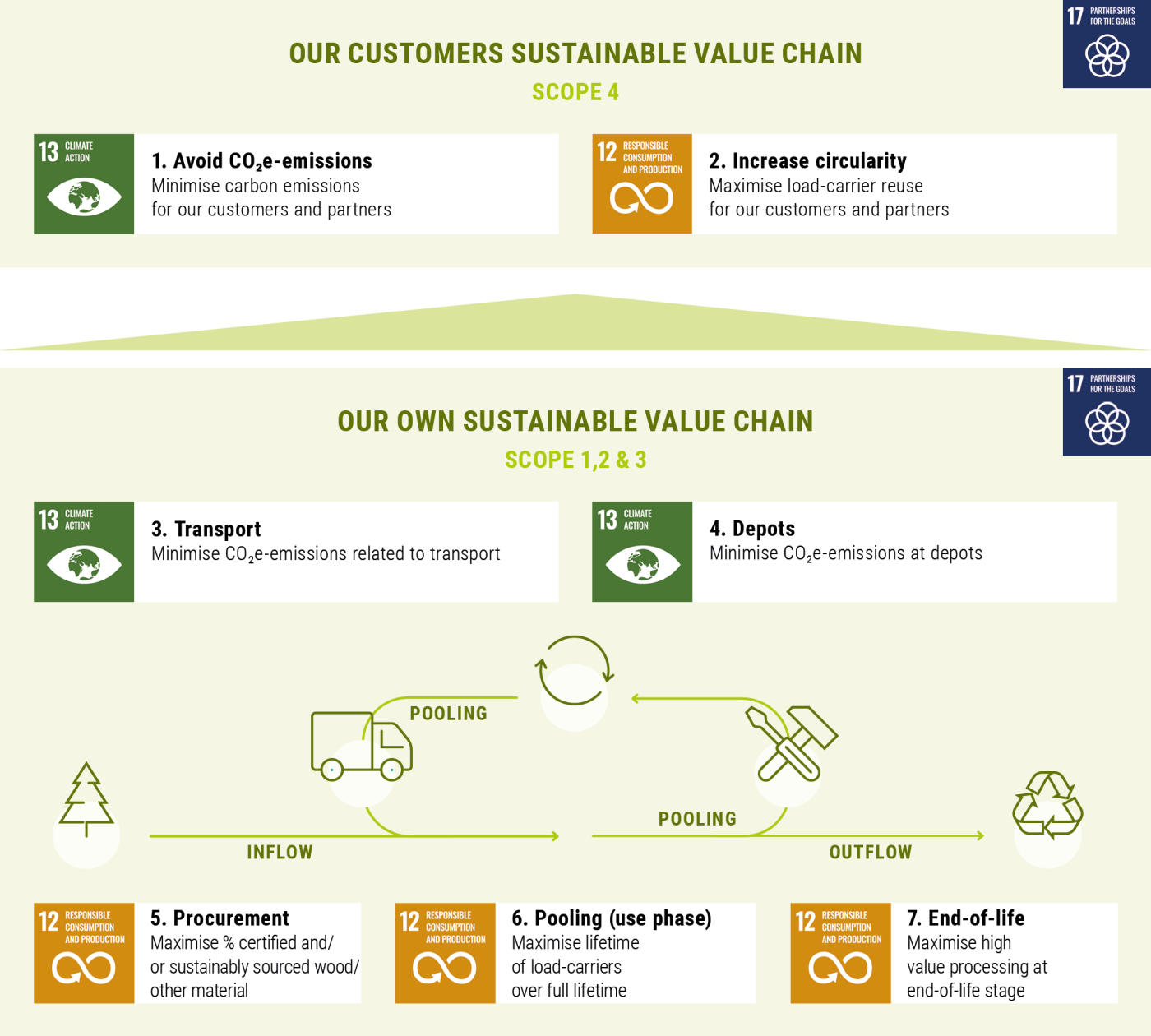
The Peak Programme translates our environmental strategy and is visualized in chapter 3. The programme consists of seven impact areas that help us reducing our carbon footprint, minimizing the use of new materials, maximising reuse, and strengthening strategic partnerships to achieve our sustainability targets.
The programme has a dual focus: on the one hand, we aim to increase our positive impact (Scope 4), by helping our customers make their supply chain more sustainable and save carbon emissions. On the other hand, we focus on reducing our negative impact across Scope 1, 2 and 3 emissions, resource use and waste streams.
Peak Programme
The programme is closely aligned with the material topics highlighted in our materiality assessment (see chapter 2), ensuring our efforts are both focused and impactful within the broader sustainability strategy. Our environmental approach is structured around three themes, which are directly linked to our material topics and embedded within the Peak Programme:
• Climate Change & Energy Reduction focuses on CO₂e-reduction, energy efficiency and the reduction of air pollution through cleaner transport.
• Circularity addresses the reduction of the inflow of new materials and the responsible management of material outflows through maximizing reuse in our circular pooling system
• Biodiversity relates to our impact on natural ecosystems, such as forests, primarily through responsible wood sourcing and circular use of wood.
To advance our environmental objectives, we have established the ‘Peak Programme’. This initiative is designed to drive tangible progress across the Faber Development Goals, specifically Responsible Production and Consumption (12), Climate Action (13) and Partnerships (17).
Sustainability Progress Report | 2025
chapter four
Environment
In balance
with nature


Our impact on biodiversity is primarily linked to the sourcing of wood and the management of material flows. By reducing the demand for new materials through circular use and ensuring responsible sourcing of wood, we limit our impact on ecosystems.
The use of FSC and PEFC certified wood plays an important role in safeguarding sustainable forest management and protecting biodiversity. Our ambition to reach 100% certified wood by 2030 further strengthens this approach.
In addition, we contribute to ecosystem restoration through targeted initiatives. Together with partners such as Land Life, we support reforestation projects across Europe. Over the past years, almost 110,000 trees have been planted, contributing to the restoration of degraded land and supporting biodiversity.
Biodiversity
Extending the lifespan of load carriers is a key lever in reducing material use and environmental impact. By increasing reuse, we reduce the demand for new materials and minimise waste generation.
We achieve this by:
increasing recovery and reuse rates of pallets
enhancing traceability through digital solutions
improving repair and maintenance processes
Initiatives such as PRS Green Label, the Connected Load Carrier programme, and pallet recovery campaigns support higher return rates and more efficient use of assets. Technologies such as RFID, QR codes and barcodes improve visibility across the supply chain and help reduce losses.At the end of their lifecycle, load carriers are processed in a responsible way, ensuring materials are reused or recycled where possible.
Extending product lifespan and reuse
We aim to ensure that the materials we do use are sourced responsibly. A key focus is the use of certified wood in the production of new load carriers.
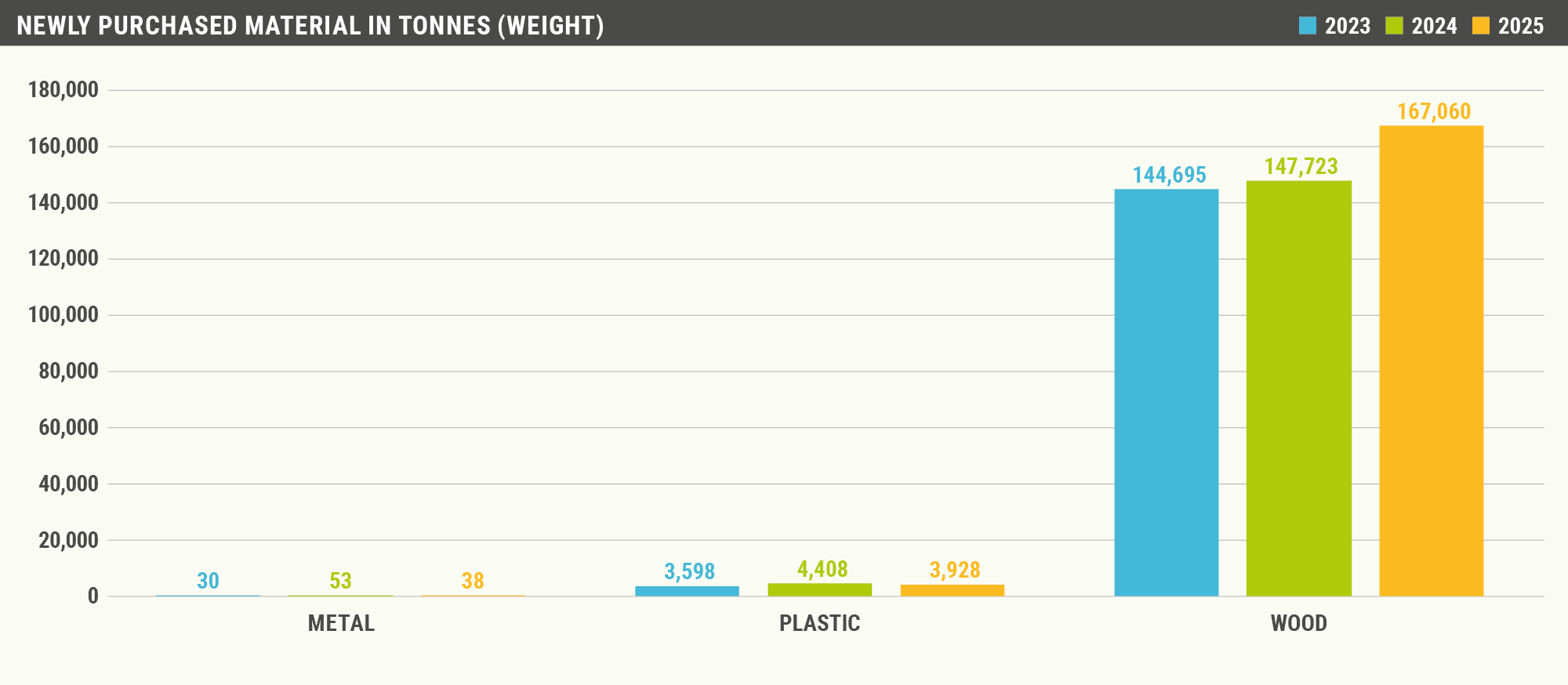
We have nearly achieved our 2030 target of sourcing 100% FSC/PEFC-certified wood for newly purchased pallets across all divisions. Minor fluctuations between years may occur, for example due to temporary sourcing decisions driven by operational needs.
To further enhance the resilience of our supply chain, we are elevating the sustainability standards of our suppliers through the GREEN30+ programme. This initiative ensures that sustainability considerations are increasingly integrated into our procurement choices and supplier interactions.
Sustainable sourcing of materials
Circularity is at the core of Faber Group’s business model. By operating a pooling system, we maximize the reuse of load carriers and reduce the need for new materials.
The majority of materials used within our operations consist of wood for load carriers, a renewable source, complemented by smaller volumes of non-renewable sources such as plastics and other materials. As our business grows, the total volume of newly purchased load-carriers increases. Reducing the need for new materials remains a key priority and is closely linked to reuse, improving asset utilisation and extending product lifespan.
Circularity
We quantify avoided emissions using the Guidance on Avoided Emissions published by the World Business Council for Sustainable Development (2023). Emission savings per trip are calculated through comparative Life Cycle Assessments (LCA), conducted in 2023 and 2024 according to ISO 14040/44 standards and subject to peer review. By multiplying the savings per rotation by the total number of trips, we determine the total annual emissions avoided for our customers.
In 2025, our efforts enabled customers to avoid more than 40,000 tonnes of CO₂e, representing an increase of 9% compared to 2023. Our ambition is to increase this to more than 58,000 tonnes of CO₂e annually by 2030.
We continue to grow these avoided emissions by scaling our pooling model and extending its reach. This includes supporting customers in transitioning from one-way load carriers to reusable pooling systems, as well as introducing innovative solutions in traditionally linear markets. An example of this is RUDi (ReUsable Display), developed by IPP Germany, which enables reuse in display applications that were previously based on single-use solutions.
Scope 1 and Scope 2 Emissions: Performance and Drivers
Given that the majority of our emissions occur in Scope 3, reducing emissions across the value chain remains a key priority. Our approach focuses on improving transport efficiency, transitioning to lower-emission transport solutions, and optimising our logistics network.
A key initiative in this area is GREEN30+, Faber Group’s procurement programme designed to accelerate the decarbonisation, competitiveness and resilience of our supply network. Through GREEN30+, we:
embed sustainability criteria into sourcing decisions
collaborate with suppliers to reduce emissions through cleaner transport and energy-efficient operations
improve supply chain performance through lower-carbon logistics and better visibility of environmental data
strengthen collaboration across teams to align sustainability, operational and commercial objectives
By integrating sustainability into procurement and supplier engagement, we aim to deliver measurable reductions in Scope 3 emissions while building a more resilient and efficient supply network.
Energy & carbon footprint reduction in our own operations (Scope 1 & 2)
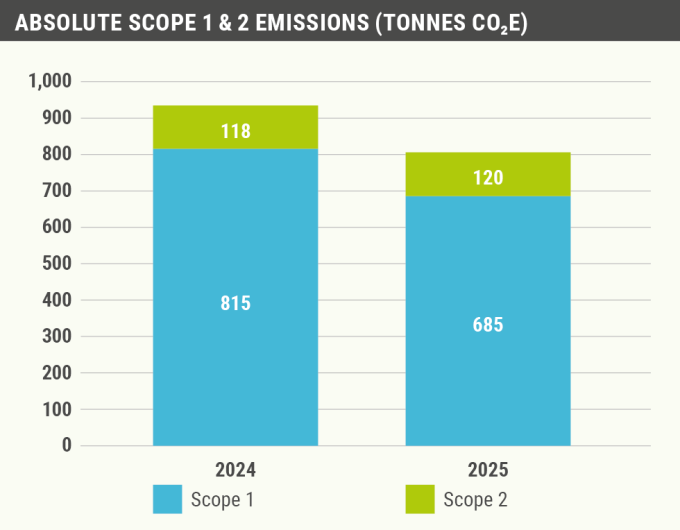
Although emissions from our own operations represent a relatively small share of our total footprint, we remain committed to reducing energy consumption and associated emissions across our offices and company vehicles, with the ambition to achieve net-zero Scope 1 and 2 emissions by 2030.
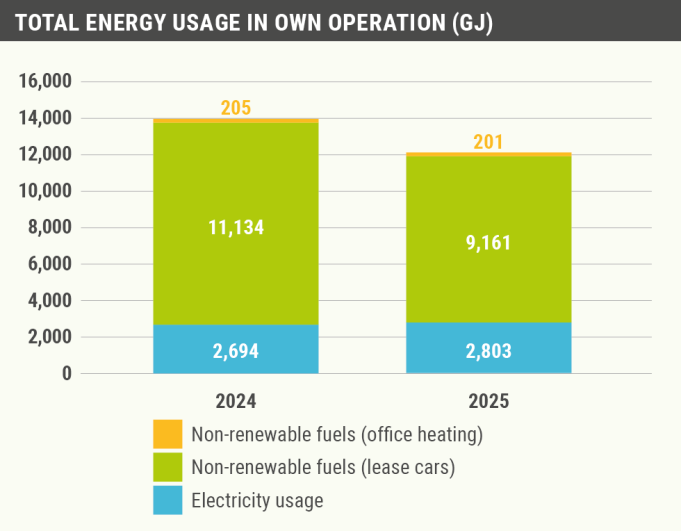
Scope 1 emissions within our operations are primarily associated with fuel consumption from company vehicles and the use of gas in our buildings. Scope 2 emissions result from the purchase of electricity to power our facilities. In 2025, we achieved a reduction in our combined Scope 1 and Scope 2 emissions compared to 2024. This positive outcome is largely attributable to our ongoing transition to an electric vehicle fleet and the implementation of measures to enhance operational efficiency across our sites and activities. Total energy consumption in our own operations decreased from 14,032 GJ in 2024 to 12,165 GJ in 2025. This reflects the impact of ongoing efforts to improve energy efficiency and optimise the use of energy across our operations.
Reducing energy consumption and emissions in our own operations remains a focus, supported by measures such as the transition to an electric vehicle fleet, optimisation of energy use in office buildings, and increased organisational awareness. These actions contribute to a structural reduction in energy consumption and support our broader ambition to reduce greenhouse gas emissions.
Improving our positive impact
Beyond reducing our own operational emissions, we aim to increase the positive impact of our business model by helping our customers lower their carbon footprint. This is achieved by promoting the adoption of our circular pooling system, which delivers substantial carbon savings compared to less sustainable alternatives such as single-use pallets and 1-to-1 exchange systems. We refer to these savings as avoided emissions, or ‘Scope 4’.
Reducing Scope 3 emissions in the value chain
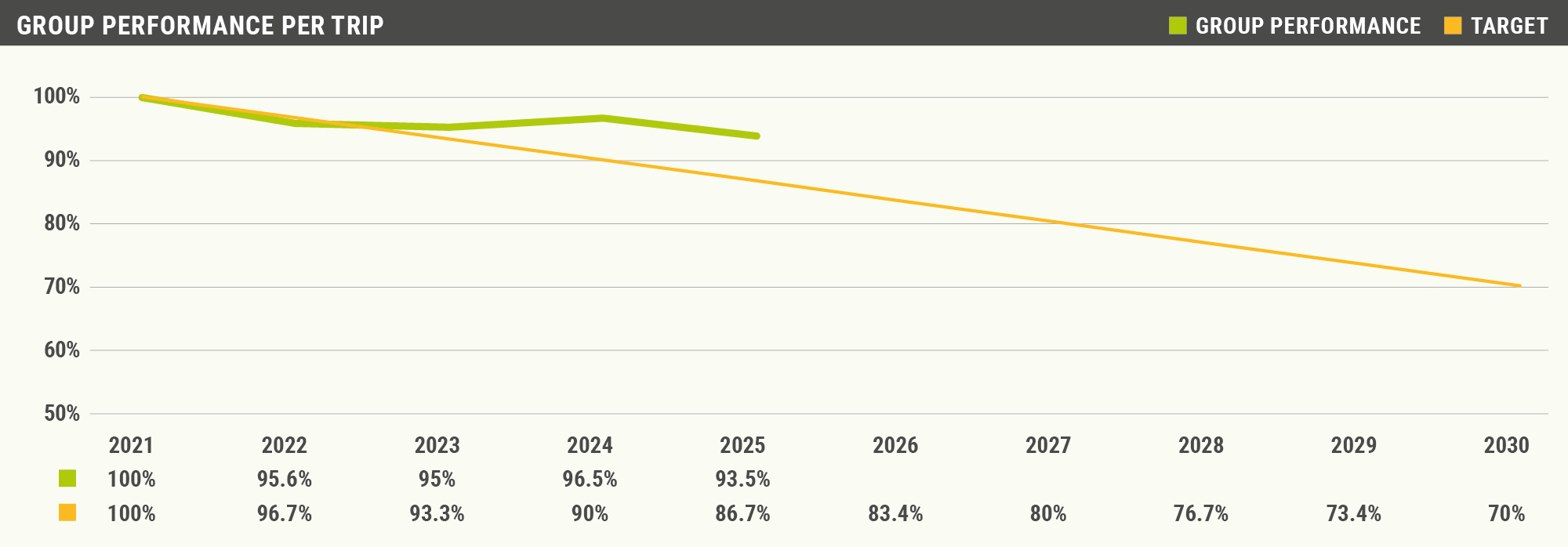
At group level, we monitor emissions intensity against our long-term reduction target towards 2030. Emissions intensity is calculated as a weighted average of the performance of each division, with weighting based on the share of revenue per division.
Overall, the group shows a reduction in emissions intensity compared to the 2021 baseline. While performance fluctuates year-on-year, the general trend indicates progress towards our target, although continued effort is required to stay aligned with the 2030 trajectory.
Group performance and target trajectory
Across the group, emissions intensity has developed differently among divisions. Both PRS and PAKi have achieved a clear and sustained reduction in CO₂e emissions per trip over recent years. This improvement is primarily attributed to a focus on optimising the network, the adoption of cleaner fuels such as HVO diesel, and an increased reliance on intermodal transport solutions. For IPP and vPOOL, emissions intensity fluctuates over time. In the case of vPOOL, this is largely driven by an increase in the purchase of new load carriers, which has a direct impact on Scope 3 emissions. Emissions per trip for IPP remain relatively stable. Despite ongoing sustainability efforts, IPP has expanded into new geographical markets where the network is still developing and therefore less efficient. As a result, the impact of these expansion activities offsets part of the improvements achieved through sustainability initiatives.
For SATIM, 2025 shows a downward trend, nevertheless, emissions intensity per m³ of wood are still above the 2021 baseline. This is mainly explained by longer transport distances, as wood sourcing shifted to northern Scandinavia. The absolute emissions of SATIM have decreased since 2021.
Reducing energy use and carbon emissions across our value chain (Scope 3)
As we expand our operations, monitoring emissions intensity is essential for assessing our progress towards environmental sustainability. Although overall emissions may rise with increased business activity, evaluating emissions per movement/trip offers a more accurate measure of efficiency gains achieved throughout our value chain.
Within our pooling operations, emissions intensity is tracked as kilograms of CO₂ equivalent per trip. For our wood sourcing activities (SATIM), intensity is measured in kilograms of CO₂ equivalent per cubic metre of wood, allowing us to pinpoint improvements and drive further reductions.
Overall emissions development
Our absolute greenhouse gas emissions have decreased since 2021. At the same time, the number of trips within our network has increased, reflecting the continued growth of our business and the expansion of our pooling activities. This development highlights the importance of not only monitoring absolute emissions, but also emissions intensity. As our activity levels increase, emissions per unit provide a more meaningful indicator of performance and progress in reducing our impact across the value chain. In the next section, we further elaborate on our emissions intensity target and performance.
Enhancing transport efficiency and adopting cleaner fuels are key strategies for lowering our environmental footprint. Additionally, a major opportunity for further impact reduction lies in minimising the demand for new load carriers. This can be accomplished by making the most efficient use of the existing pool. Strategies include increasing the frequency of rotations, minimising losses through enhanced digitalisation and improved traceability, and prolonging product life by ensuring proper care, timely repairs, and regular maintenance. By reducing the demand for new load carriers, we also lower the need for raw materials such as wood, thereby reducing our overall environmental impact across the value chain.
As illustrated in the pie charts below, the majority of our environmental impact comes from Scope 3 and is driven by the production of new load carriers and transport activities (both upstream and downstream). Emissions from Scope 1 and 2, such as offices and lease cars, represent only a small share of the total footprint.
Energy and greenhouse gas data are compiled from internal operational systems, procurement data, logistics data, utility invoices, fuel card data and external supplier information. Greenhouse gas emissions are calculated in accordance with the GHG Protocol. The organisational boundary is based on operational control. Emissions are expressed in CO₂ equivalents (CO₂e) using several emission factor databases such as EcoInvent, GLEC, Defra and Faber specific emission factors calculated from our Life Cycle Assessments. Where relevant, prior-year figures are recalculated to ensure consistency and comparability. For our Scope 3 targets we use 2021 as a base year and for Scope 1 & 2 this is 2024.
Methodology note
Climate change mitigation is a key priority within Faber Group’s environmental strategy. We focus on reducing greenhouse gas (GHG) emissions across our operations and value chain.
Greenhouse gas emissions
We have mapped all relevant GHG emissions across our business model, as illustrated in the overview on page 21. In this overview, a distinction is made between supporting activities (such as offices and employees) and our core pooling activities. Our carbon footprint for 2024 and 2025 has been externally verified by DEKRA in accordance with ISO 14064-1. The assurance statement for 2025 can be found in appendix II. Our greenhouse gas emissions are reported in line with the GHG Protocol and include:
• Scope 1: direct emissions from owned or controlled sources, such as fuel use in company vehicles and gas consumption in buildings
• Scope 2: indirect emissions from purchased electricity
• Scope 3: all other indirect emissions across the value chain, including the production of load carriers and transport activities
Climate mitigation & energy reduction
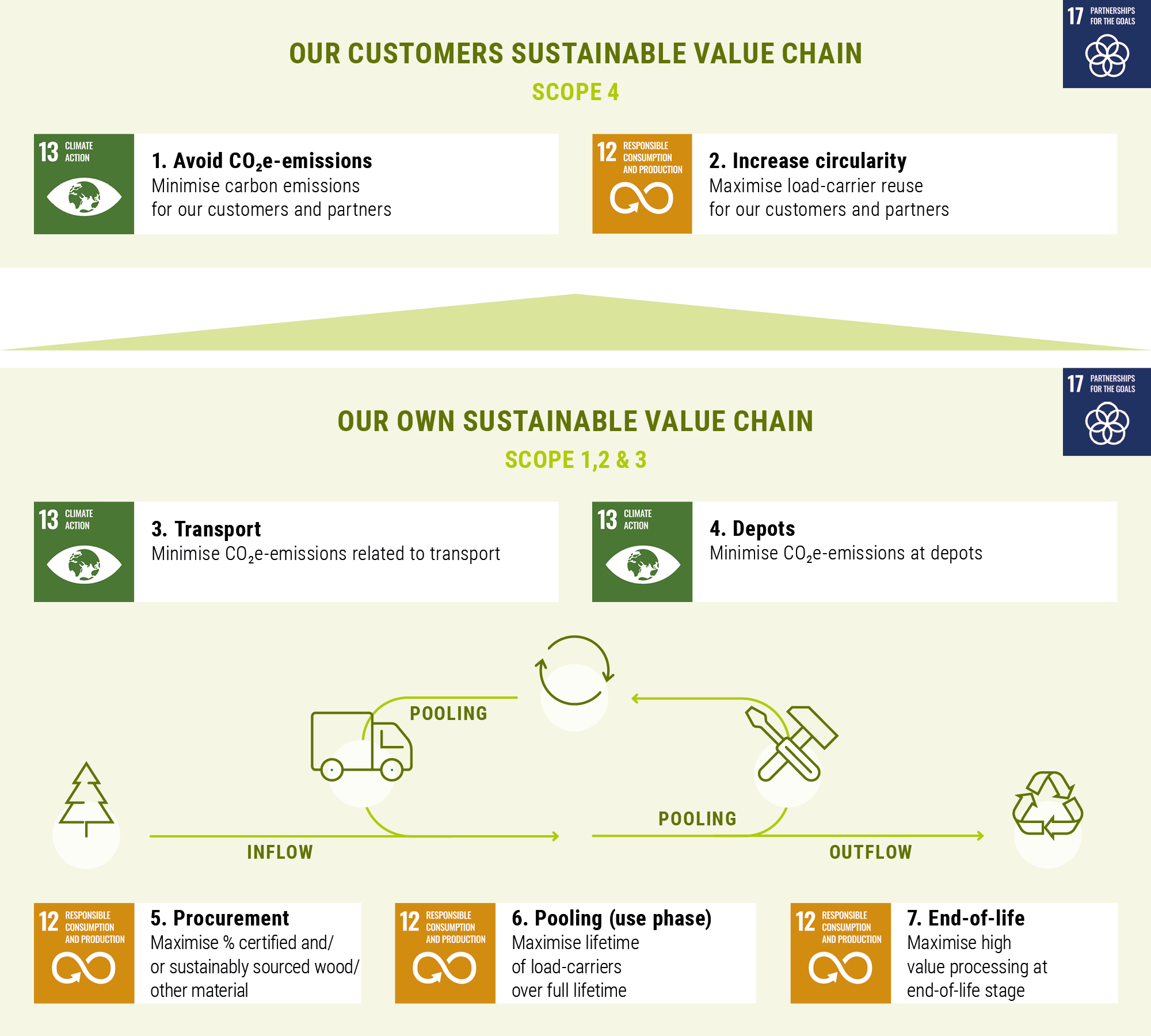
The Peak Programme translates our environmental strategy and is visualized in chapter 3. The programme consists of seven impact areas that help us reducing our carbon footprint, minimizing the use of new materials, maximising reuse, and strengthening strategic partnerships to achieve our sustainability targets.
The programme has a dual focus: on the one hand, we aim to increase our positive impact (Scope 4), by helping our customers make their supply chain more sustainable and save carbon emissions. On the other hand, we focus on reducing our negative impact across Scope 1, 2 and 3 emissions, resource use and waste streams.
Peak Programme
The programme is closely aligned with the material topics highlighted in our materiality assessment (see chapter 2), ensuring our efforts are both focused and impactful within the broader sustainability strategy. Our environmental approach is structured around three themes, which are directly linked to our material topics and embedded within the Peak Programme:
• Climate Change & Energy Reduction focuses on CO₂e-reduction, energy efficiency and the reduction of air pollution through cleaner transport.
• Circularity addresses the reduction of the inflow of new materials and the responsible management of material outflows through maximizing reuse in our circular pooling system
• Biodiversity relates to our impact on natural ecosystems, such as forests, primarily through responsible wood sourcing and circular use of wood.
To advance our environmental objectives, we have established the ‘Peak Programme’. This initiative is designed to drive tangible progress across the Faber Development Goals, specifically Responsible Production and Consumption (12), Climate Action (13) and Partnerships (17).
Sustainability Progress Report | 2025